Home › Van Gogh Facts › Photos of Van Gogh
Van Gogh Facts
Photos of Vincent van Gogh: The Only Known Photographs
Vincent van Gogh painted more than 35 self-portraits, yet only one photograph of his face is known to survive. For sixty years there seemed to be two, until the Van Gogh Museum found in 2018 that the boy in the other one was his brother Theo. Here is every photograph linked to Van Gogh, what is genuine and what is not.

The photograph at 19
In January 1873 Vincent was 19 and had been working for four years at the Hague branch of the Paris art dealers Goupil & Cie, a job his uncle Cent had found him. Around this time he sat for a studio portrait in The Hague. The photo shows a serious young man with thick, wavy hair, a high collar and a dark tie, looking slightly past the camera. It is a carte-de-visite, the small mounted portrait that families in the 1870s exchanged and kept in albums.
The photograph stayed in the family and is now in the collection of the Van Gogh Museum in Amsterdam. In May 1873 Goupil transferred Vincent to its London branch, the start of the years described in Van Gogh before he painted.
The “age 13” photo is really Theo
For decades almost every biography also printed a second photograph: a boy with a round face and curly hair, captioned “Vincent van Gogh, about 1866”. It was first shown publicly in 1957, at an exhibition organised by the Belgian Van Gogh researcher Mark Edo Tralbaut, who identified the boy as the 13-year-old Vincent. Because the boy looks a little like the young man in the 1873 photo, nobody questioned it.
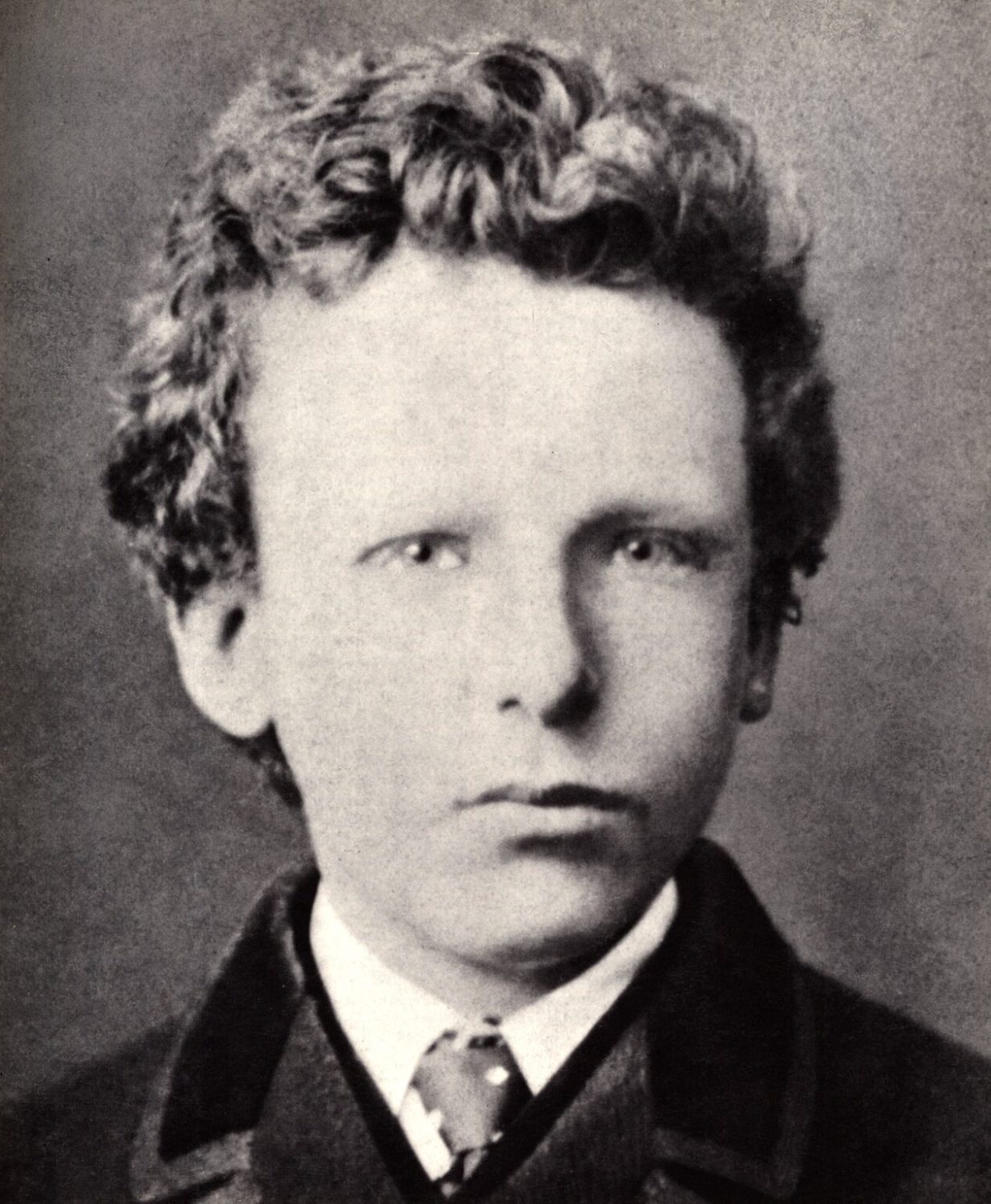
Doubts grew after 2014, when a Dutch television programme tried to morph the two faces into each other with mixed results. The decisive clue came from the photographer’s stamp. The picture was made by Balduin Schwarz in Brussels, and a researcher discovered that Schwarz only opened his Brussels studio in 1870, when Vincent was already 17. Theo, on the other hand, moved to Brussels in early 1873, aged 15, to work for Goupil, and wrote in a letter that he had had his photograph taken there. After comparing the face with later photos of Theo and carrying out forensic research, the Van Gogh Museum announced on 29 November 2018 that the boy is Theo. The museum believes the portrait was probably made as a present for the brothers’ father.
That leaves the 1873 photo at 19 as the only accepted portrait photograph of Vincent.
The back-view photo with Émile Bernard
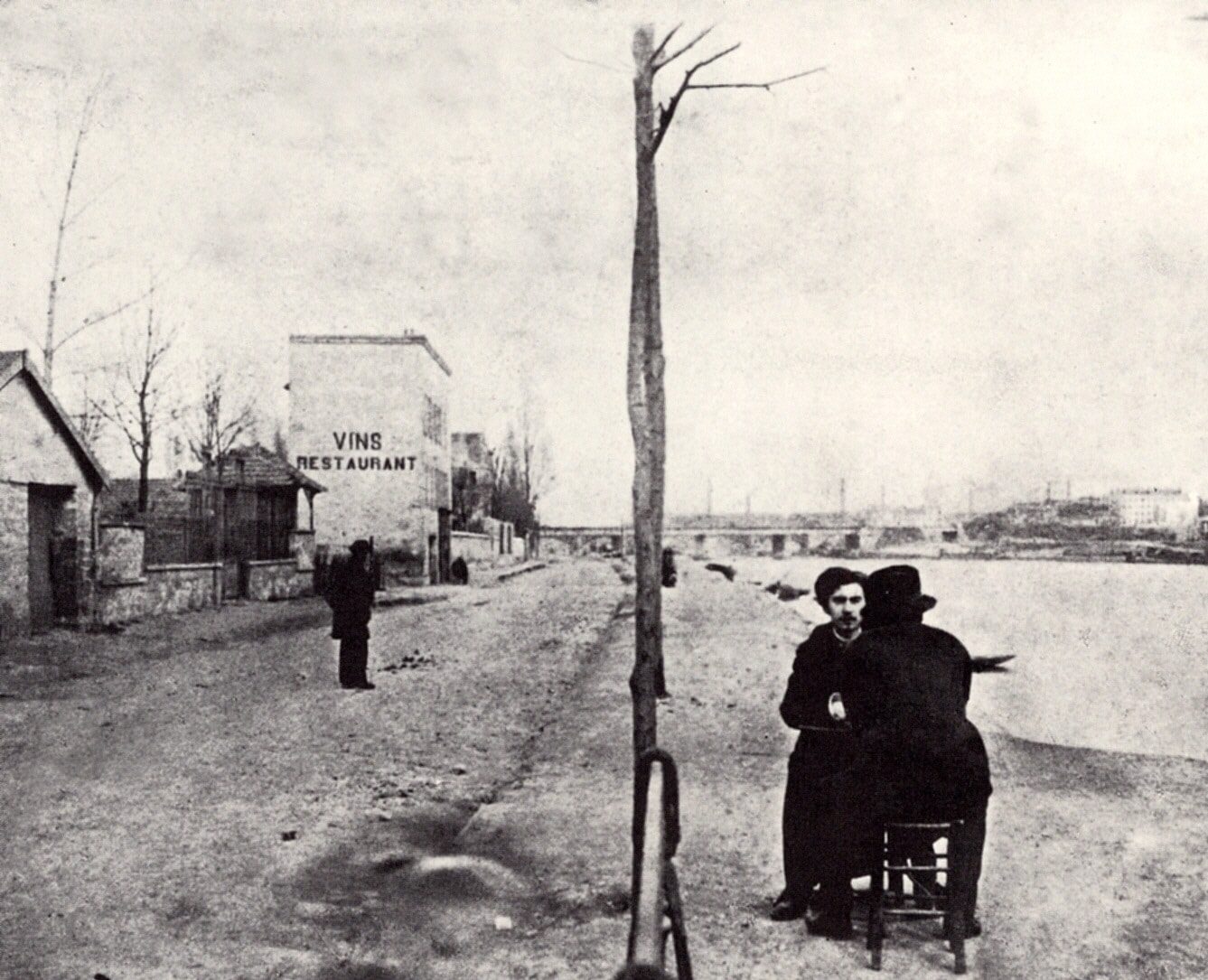
One more photograph is generally accepted as showing Van Gogh, although you cannot see his face. Taken on the banks of the Seine at Asnières, just outside Paris, around 1886–87, it shows the young painter Émile Bernard facing the camera, in conversation with a man who has his back to the lens. The man is traditionally identified as Van Gogh, who often went to paint at Asnières with Bernard, whose family lived there. Because his face is hidden, the identification rests on the setting and on the friendship rather than on his features.
Photos that are not him
Because only one photograph of Van Gogh exists, any old picture of a red-bearded man in the right place tends to be presented as a discovery. None has been accepted:
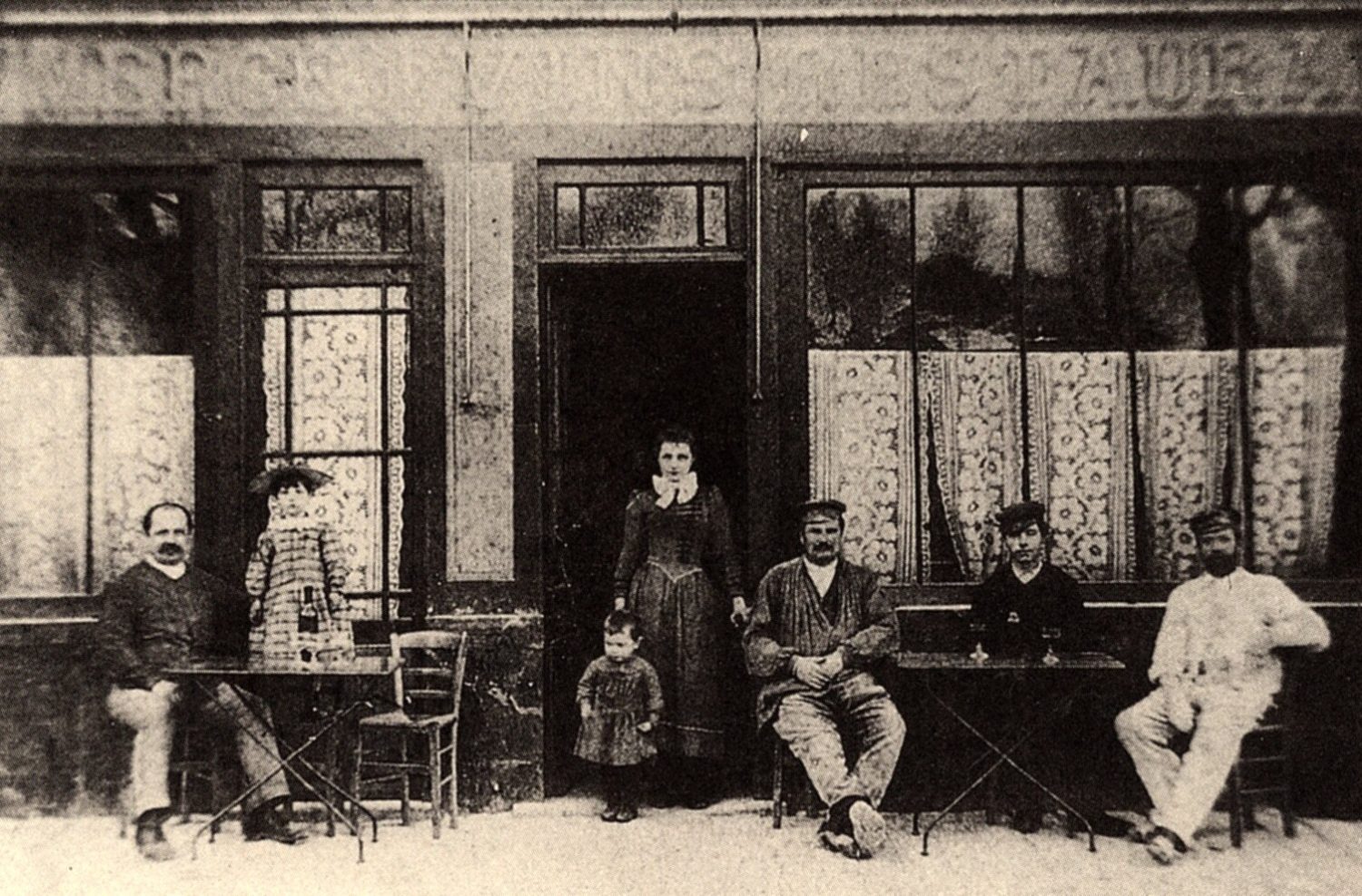
- The 1887 group photo. In 2015 a photograph of five men at a table, said to include Van Gogh with Paul Gauguin, Émile Bernard, Félix Jobbé-Duval and André Antoine, was put up for auction in Brussels by The Romantic Agony. The Van Gogh Museum’s photography expert said it could not be Van Gogh because it simply does not look like him.
- The Victor Morin cabinet card. A studio portrait of a bearded man in a bow tie, made by the photographer Victor Morin and promoted by its owner as Van Gogh around 1886, circulates widely online. It has no documented link to the family and is not recognised by the Van Gogh Museum.
- AI “photos”. Colourised or AI-generated “photographs” of Van Gogh made from his self-portraits are illustrations, not photographs.

Why are there so few?
Van Gogh was poor for most of his adult life, and studio photographs cost money. More importantly, he did not like them. In a letter to his sister Wil in September 1889 he said he found photographs ugly and did not want them, especially of people he loved, because photographic portraits fade faster than we do, while a painted portrait lasts for generations. In June 1890, in another letter to Wil, he said he wanted to paint portraits that would look like apparitions to people a century later.
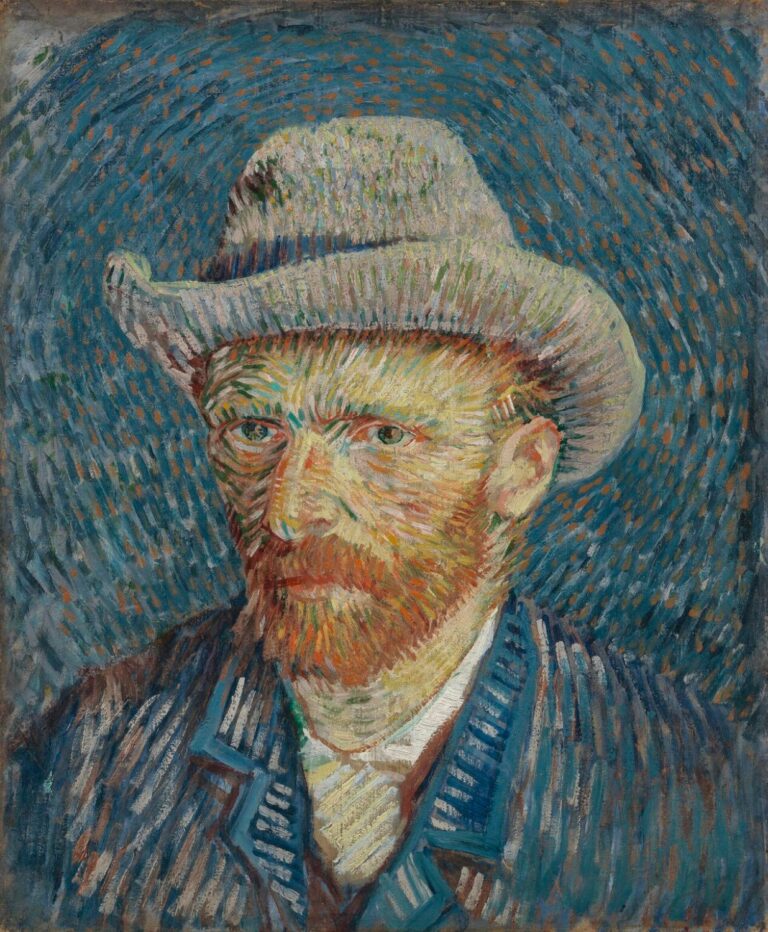
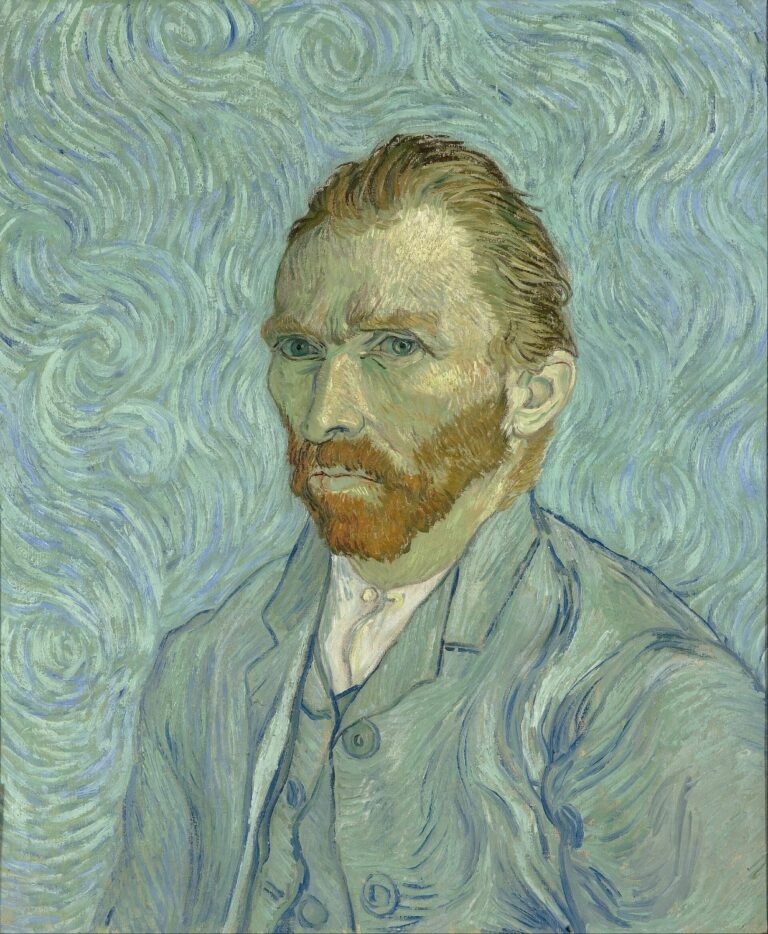
Instead he painted himself. In Paris in 1886–88, unable to pay models, he made more than 25 self-portraits, using a mirror; in Arles and Saint-Rémy he made a handful more. They are the best record of how he looked: reddish hair and beard, pale blue-green eyes, a narrow face and, from 1886, a short cropped beard. See Van Gogh’s self-portraits.
Photographs of his world
If there are almost no photos of Van Gogh, there are many of the places and people around him. Early photographs record the Auberge Ravoux in Auvers-sur-Oise, where he rented an attic room in 1890 and died, and the bare rooms of the asylum of Saint-Paul-de-Mausole at Saint-Rémy. There are studio portraits of Theo, of Jo van Gogh-Bonger, of his parents and sisters, and of friends such as Bernard, Gauguin and Dr Gachet; see the Van Gogh family.

Frequently asked questions
How many photos of Vincent van Gogh exist?
Only one portrait photograph is accepted as genuine: Vincent aged 19, taken in The Hague around January 1873. A back-view photo with Émile Bernard at Asnières is also traditionally said to show him.
Is the photo of Van Gogh at 13 real?
No. In 2018 the Van Gogh Museum concluded that the photo long captioned “Vincent aged 13” shows his brother Theo aged 15, taken in Brussels in 1873.
Why are there so few photographs of Van Gogh?
He was poor and he disliked photographic portraits, which he told his sister Wil faded faster than people. He preferred to paint himself and made more than 35 self-portraits.
Where is the photograph of Van Gogh at 19?
In the collection of the Van Gogh Museum in Amsterdam.
Sources: Van Gogh Museum: Photo of Vincent van Gogh turns out to be his brother Theo (2018); The Art Newspaper: Mistaken identity (2018); DutchNews: Van Gogh photo unlikely to be him (2015); Van Gogh Letters.