Home › Van Gogh Facts › How did Van Gogh die?
Van Gogh Facts
How Did Van Gogh Die?
Vincent van Gogh died on 29 July 1890 in Auvers-sur-Oise, France, aged 37, two days after being wounded by a gunshot. Here is what we know about his last days – and why the story is still debated.
What happened on 27 July 1890
Van Gogh had been living in Auvers-sur-Oise, a village north of Paris, since 20 May 1890, renting a small attic room at the inn run by Arthur Ravoux. On the afternoon of Sunday 27 July he went out, as he usually did, to paint in the countryside. That evening he returned to the inn holding his side, went up to his room and was found there injured.
He said he had shot himself with a revolver. Two doctors, his physician Dr Paul Gachet and a local doctor, examined him. The bullet had entered his body below the ribs and could not be removed, and in 1890 there was no surgery that could save him.
His last hours
Dr Gachet wrote to Theo, who rushed from Paris the next morning. The brothers spent the day together, talking and smoking. Van Gogh was calm and lucid. He died at about 1.30 in the morning of 29 July 1890. According to accounts that go back to Theo, among his last words were “La tristesse durera toujours” – the sadness will last forever.
Why did he do it?
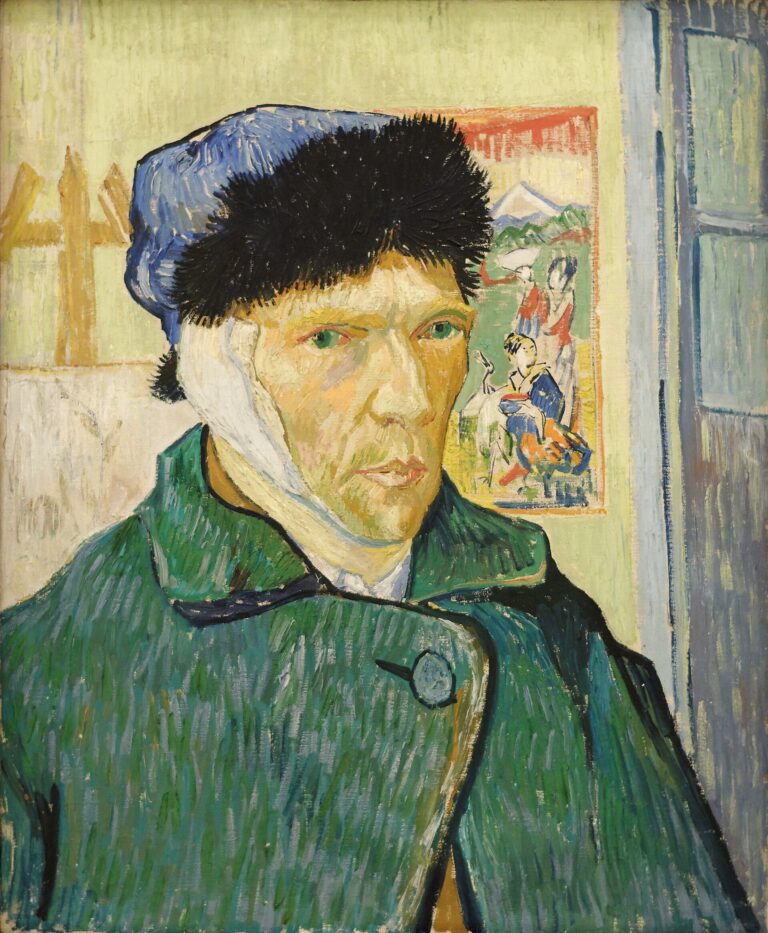
Van Gogh had suffered repeated mental health crises since December 1888, when he cut off his ear in Arles, and he had spent a year as a voluntary patient in the asylum at Saint-Rémy. In his last letters he wrote of worry about money and about being a burden to Theo, who had a new baby and was unhappy at work. His final weeks were extraordinarily productive – about seventy-five paintings in seventy days – but also lonely. Read more about his mental illness.
Was Van Gogh murdered?
In their 2011 biography Van Gogh: The Life, Steven Naifeh and Gregory White Smith suggested that he might have been shot, perhaps accidentally, by a local teenager, René Secrétan, who was known to tease him. The theory was dramatised in the 2017 film Loving Vincent and the 2018 film At Eternity’s Gate.
Most specialists, including the Van Gogh Museum, reject it. Van Gogh himself said he had shot himself, his brother and friends accepted this, and the medical evidence is consistent with it. A heavily rusted revolver found in a field near Auvers, believed to be the weapon, was sold at auction in Paris in 2019 for about €160,000.
Where is Van Gogh buried?
Van Gogh was buried on 30 July 1890 in the cemetery of Auvers-sur-Oise, on the hill above the wheatfields he had painted. Friends, including Émile Bernard and Père Tanguy, brought sunflowers and yellow flowers. Theo died six months later, in January 1891, in the Netherlands. In 1914 his widow, Jo van Gogh-Bonger, had his remains moved to Auvers so the brothers could lie side by side. Their two simple headstones, covered in ivy, are visited by thousands of people every year.
His last paintings
 Tree Roots1890 · Van Gogh Museum
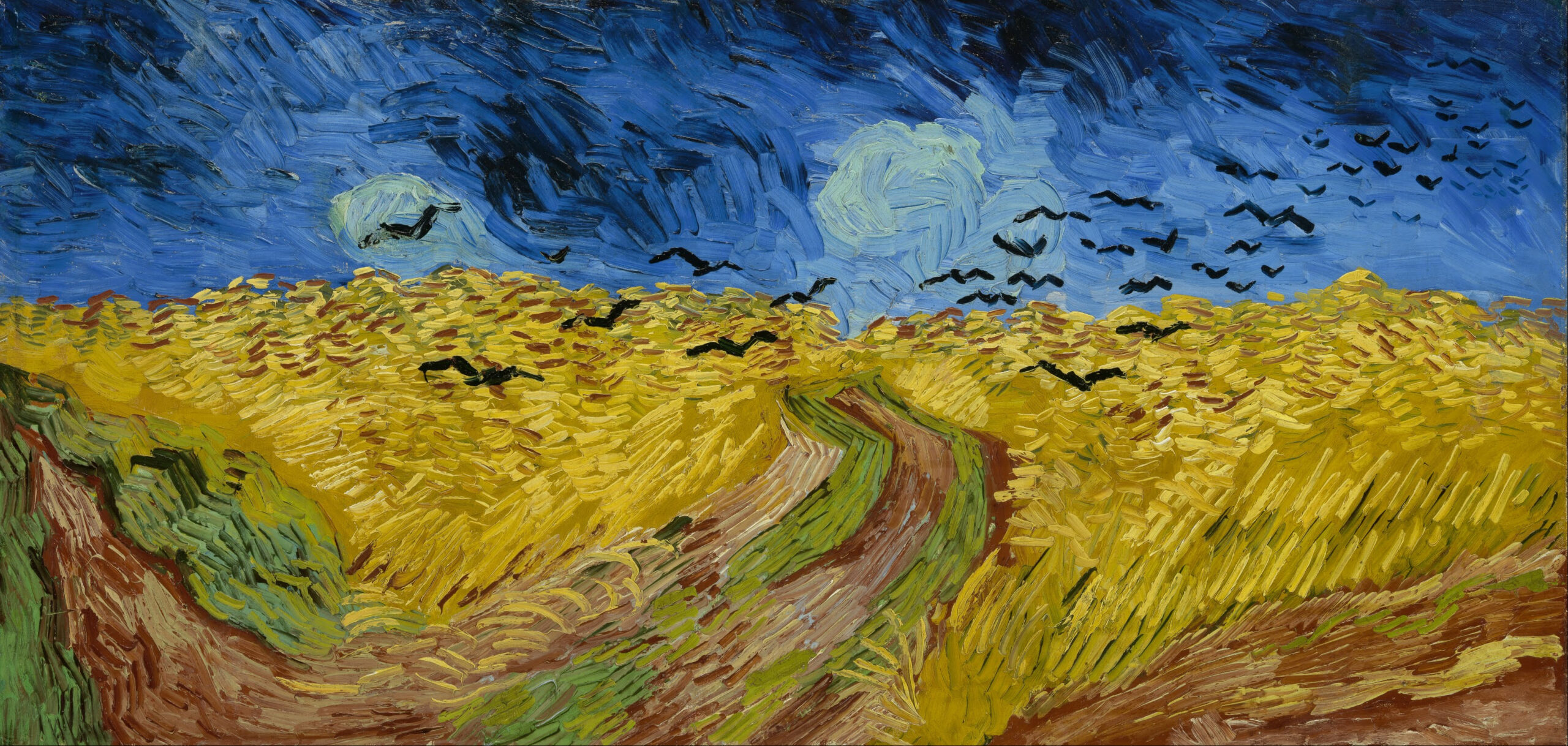
 Wheatfield with Crows1890 · Van Gogh Museum
 The Church at Auvers1890 · Musée d’Orsay
 Portrait of Dr Gachet1890 · Private collection
Frequently asked questions
How old was Van Gogh when he died?
He was 37. He was born on 30 March 1853 and died on 29 July 1890.
Where did Van Gogh die?
In his attic room at the Auberge Ravoux, an inn in Auvers-sur-Oise, north of Paris. The room is preserved and can be visited.
What was Van Gogh’s last painting?
It is not known for certain, but the Van Gogh Museum considers Tree Roots the most likely candidate.
Did Theo van Gogh die soon after Vincent?
Yes. Theo died on 25 January 1891 in Utrecht, about six months after his brother.
Follow his final months in our guide to Van Gogh in Auvers-sur-Oise, or read the full biography. If you are struggling with your own mental health, please talk to someone you trust or contact a local support line.
Sources: the Van Gogh Museum, Van Gogh’s letters, and biographies by Jan Hulsker and by Steven Naifeh and Gregory White Smith.