Home › Van Gogh Facts › Van Gogh’s mental illness
Van Gogh Facts
Van Gogh’s Mental Illness
From December 1888 until his death in July 1890, Van Gogh suffered repeated mental health crises. Doctors at the time called it a form of epilepsy; modern researchers have proposed many other explanations.
What happened to him
Van Gogh had always been intense, restless and prone to periods of depression. The first serious crisis came in Arles on 23 December 1888, when he cut off his ear. In the following months he had further episodes of confusion, hallucinations and paranoia and spent time in the hospital in Arles.
In May 1889 he admitted himself to the asylum of Saint-Paul-de-Mausole in Saint-Rémy. Over the next year he had several attacks, some lasting weeks, during which he could not work. Between them he was lucid and painted some of his greatest works. He died in Auvers-sur-Oise in July 1890, after shooting himself.
What his doctors said
Dr Félix Rey in Arles and Dr Théophile Peyron at the asylum both thought he had a form of epilepsy, a diagnosis that then covered a wide range of mental and nervous disorders. Van Gogh himself accepted this diagnosis and wrote frankly about his illness in his letters, describing his fear of new attacks and his wish to keep working.
Modern theories
Since then, more than 150 different diagnoses have been suggested, including temporal lobe epilepsy, bipolar disorder, schizophrenia, borderline personality disorder, syphilis, porphyria, Ménière’s disease and poisoning by absinthe, lead paint or the heart drug digitalis.
In 2020 a team of psychiatrists working with the Van Gogh Museum reviewed all the evidence in his letters. They concluded that he probably suffered from several conditions at once, likely including a mood disorder and a personality disorder, with alcohol abuse and malnutrition making things worse. They suggested the crisis in December 1888 might have been triggered partly by alcohol withdrawal. They found the evidence for schizophrenia weak.
Did illness make him a great painter?
It is a popular myth that Van Gogh painted in a frenzy of madness. His letters show the opposite: he planned his paintings carefully, thought deeply about colour and technique, and could not work at all during his attacks. His art was made despite his illness, not because of it.
Paintings mentioned on this page
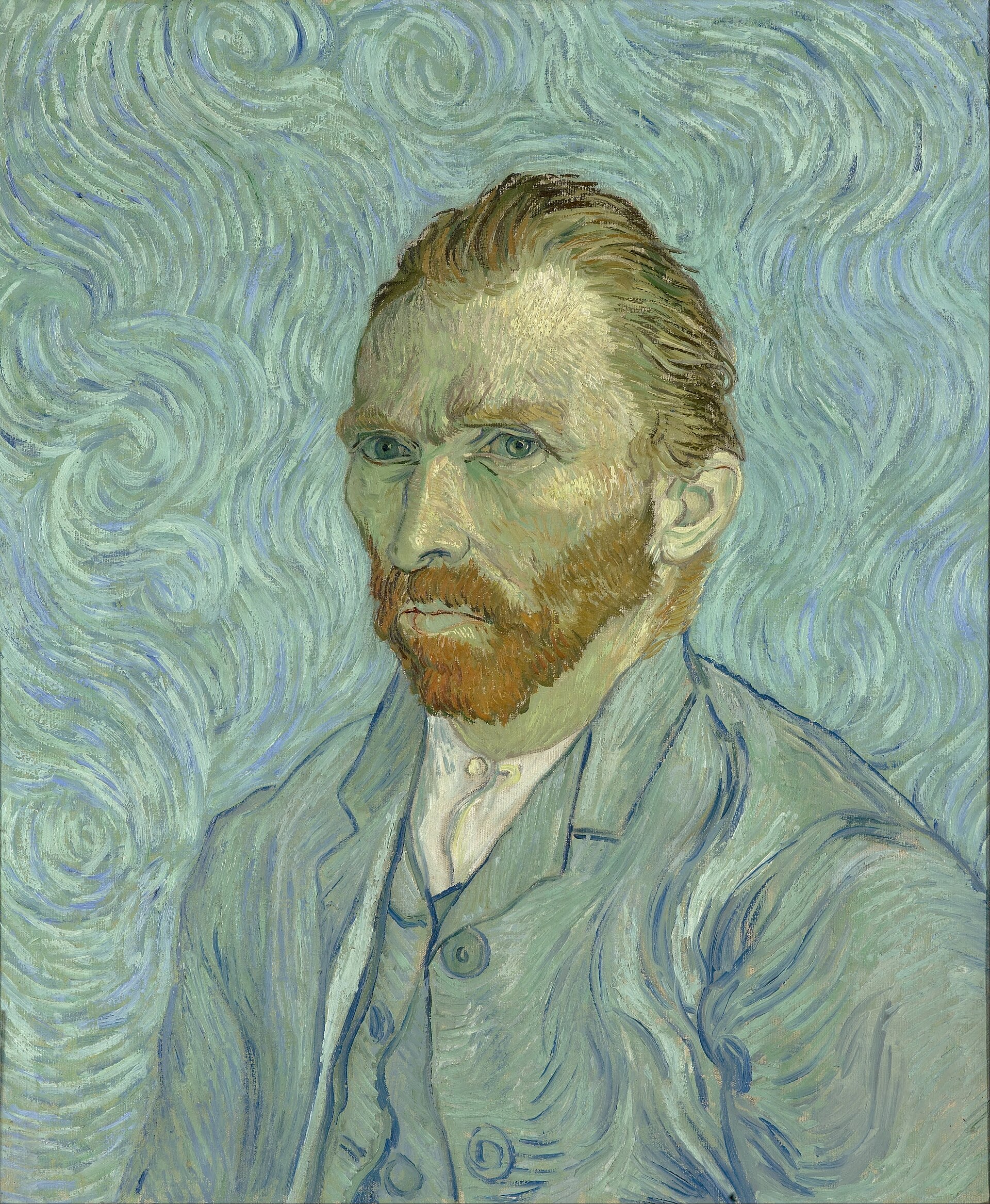
 Self-portrait1889 · Musée d’Orsay
 Self-Portrait with Bandaged Ear1889 · Courtauld Gallery
 At Eternity’s Gate1890 · Kröller-Müller Museum
 Prisoners Exercising1890 · Pushkin Museum, Moscow
Frequently asked questions
Did Van Gogh have bipolar disorder?
Possibly. A 2020 review by psychiatrists suggested a mood disorder such as bipolar disorder was likely one of several problems, but no certain diagnosis is possible today.
Was Van Gogh in an asylum?
Yes. He voluntarily stayed at the asylum of Saint-Paul-de-Mausole in Saint-Rémy-de-Provence from May 1889 to May 1890.
Read about his year in the asylum in Van Gogh in Saint-Rémy, or in his own words in the letters. If you are struggling with your own mental health, please talk to someone you trust or contact a local support line.
Sources: the Van Gogh Museum, Van Gogh’s letters, and W. A. Nolen et al., International Journal of Bipolar Disorders (2020).