In his own words
Van Gogh’s Letters: The Most Famous Letters to Theo
Vincent van Gogh was one of the great letter writers. His letters to his brother Theo tell the story of his life and art more vividly than any biography. Here are thirteen of the most celebrated, with the passages people quote most often.
The letters run from 1872, when 19-year-old Vincent was working for the art dealers Goupil in The Hague, to July 1890, days before his death in Auvers-sur-Oise. He wrote in Dutch, French and sometimes English, often illustrating his letters with sketches of the paintings he was working on. Theo kept almost every one.
Thirteen letters everyone should read
- July 1880Cuesmes, Borinage · to Theo
“There may be a great fire in our soul, yet no one ever comes to warm himself at it, and the passers-by see only a wisp of smoke coming through the chimney, and go along their way.”
After months of silence between the brothers, Vincent writes a long letter in French from the mining district, explaining why he seems idle and useless to others. It is the turning point that leads him to become an artist.
- December 1881The Hague · to Theo
“What would life be if we had no courage to attempt anything?”
Newly settled in The Hague after a bitter quarrel with his father, Vincent writes about pressing on as an artist despite every setback.
- October 1882The Hague · to Theo
“Great things are not done by impulse, but by a series of small things brought together.”
Learning to paint by sheer persistence, he reflects on how slowly real work is built up.
- October 1883Drenthe · to Theo
“If you hear a voice within you say “you cannot paint,” then by all means paint, and that voice will be silenced.”
Alone on the peat moors of Drenthe, he urges Theo – who is wondering whether to leave art dealing – to trust his own creative instinct.
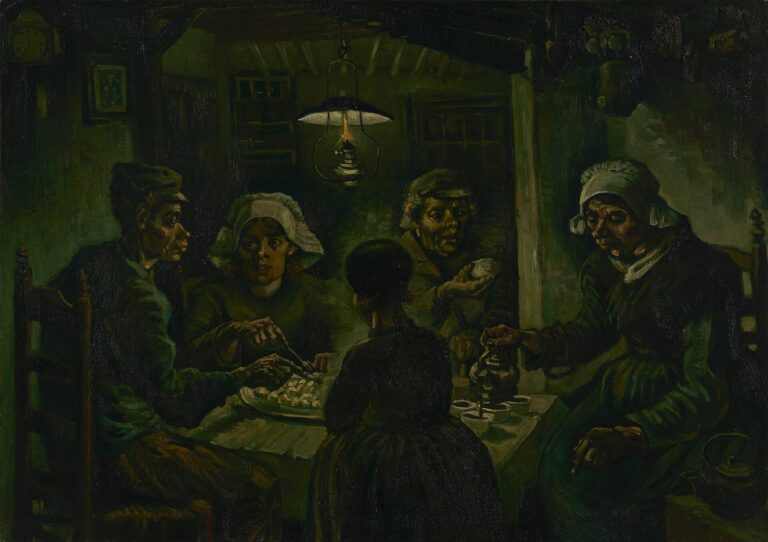
- April 1885Nuenen · to Theo

“I have tried to emphasize that those people, eating their potatoes in the lamplight, have dug the earth with those very hands they put in the dish, and so it speaks of manual labour.”
Describing The Potato Eaters, his first ambitious figure painting, and why he painted the peasants so roughly.
- July 1888Arles · to Theo
“For my part I know nothing with any certainty, but the sight of the stars makes me dream.”
Musing on life, death and what lies beyond, in a letter that foreshadows his starry night paintings.
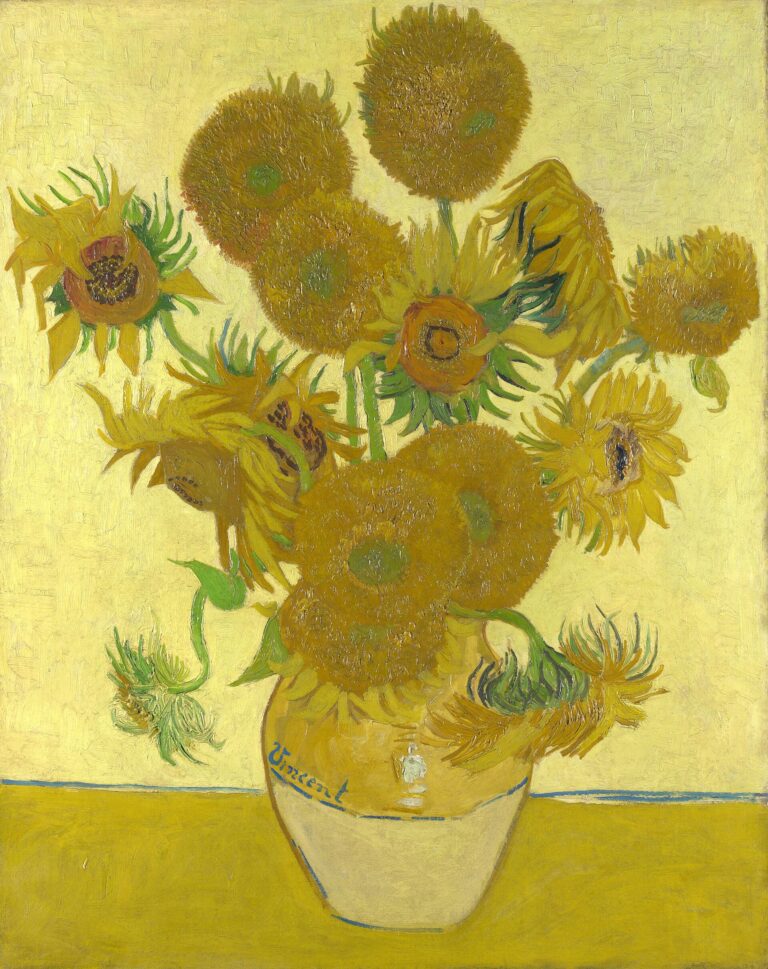
- August 1888Arles · to Theo

“I am hard at it, painting with the enthusiasm of a Marseillais eating bouillabaisse, which won’t surprise you when you know that what I’m at is the painting of some sunflowers.”
Working at top speed on the Sunflowers, which he planned as decorations for the Yellow House before Gauguin’s arrival.
- September 1888Arles · to Theo
“I have tried to express the terrible passions of humanity by means of red and green.”
On The Night Café, the all-night café where drifters slept when they could not pay for lodgings.
- September 1888Arles · to his sister Wil

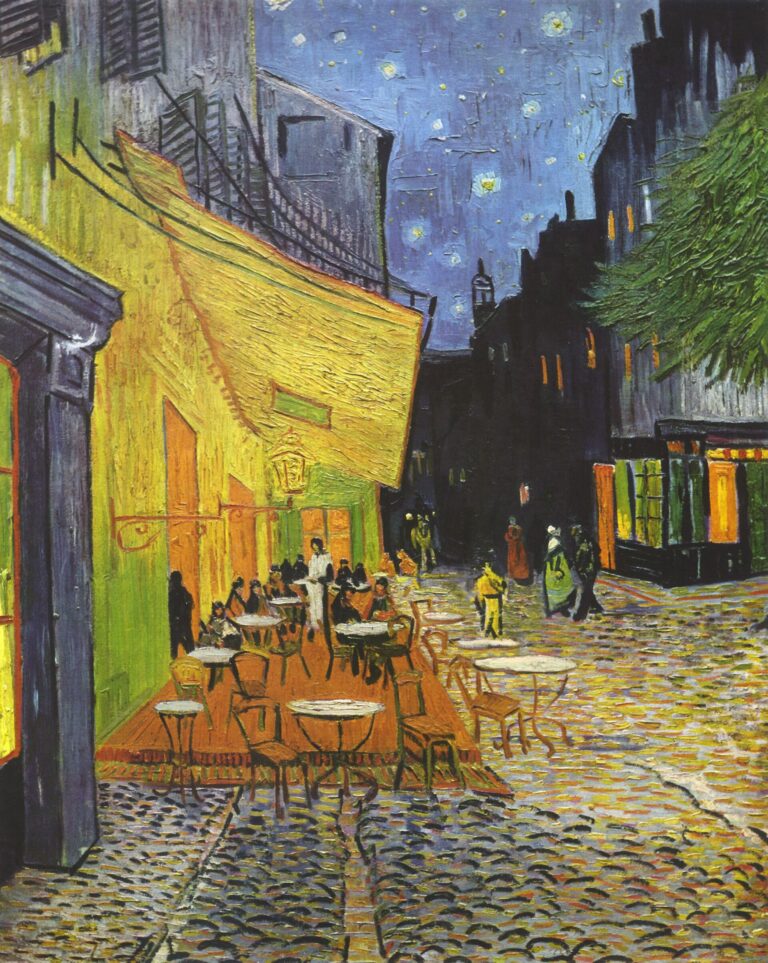
“Certain stars are lemon-yellow, others pink or a green, blue and forget-me-not brilliance.”
Writing to his youngest sister about painting the night sky on the spot, by the light of the stars.
- September 1888Arles · to Theo

“It does not prevent me from having a terrible need of, shall I say the word – of religion – then I go outside in the night to paint the stars.”
A long letter about his hopes for a community of artists in the south – and the need that drives him outside at night.
- October 1888Arles · to Theo

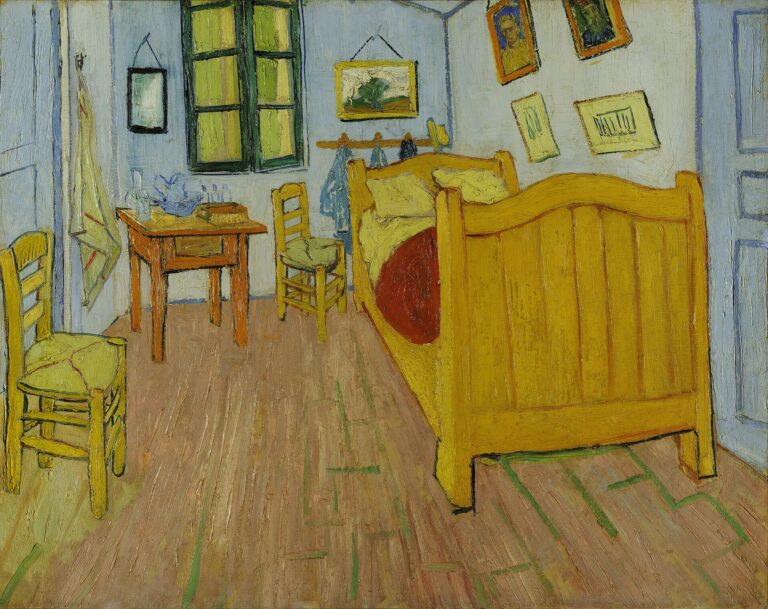
“Looking at the picture ought to rest the brain, or rather the imagination.”
Explaining the simplified, flat colours of The Bedroom, painted just before Gauguin arrived.
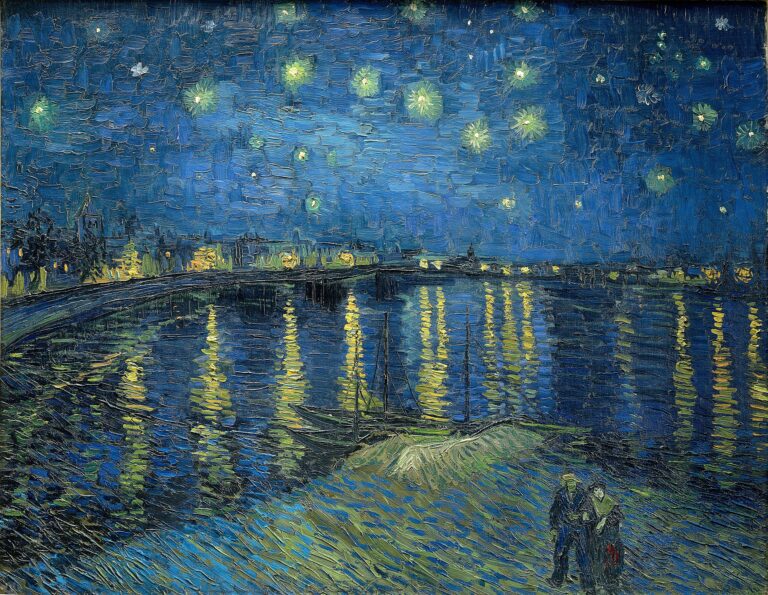
- June 1889Saint-Rémy · to Theo

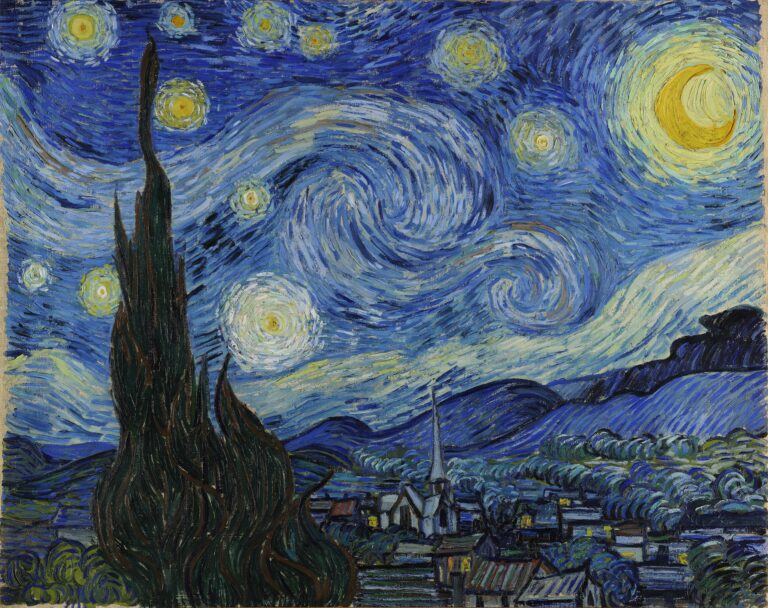
“This morning I saw the country from my window a long time before sunrise, with nothing but the morning star, which looked very big.”
From his room in the asylum he describes the view that became The Starry Night.
- July 1890Auvers-sur-Oise · to Theo

“Well, my own work, I am risking my life for it and my reason has half foundered because of it.”
A draft found among his belongings after his death, written days before he died. It ends on his work and his debt to his brother.
Who did Van Gogh write to?
- Theo van Gogh – his younger brother, an art dealer in Paris, who supported him financially for the last ten years of his life and received more than 650 letters.
- Willemien (Wil) van Gogh – his youngest sister, to whom he wrote some of his warmest letters about colour and painting.
- Anthon van Rappard – a fellow Dutch painter and early friend, with whom he discussed drawing and technique in the early 1880s.
- Émile Bernard and Paul Gauguin – fellow artists of the avant-garde, to whom he wrote about his ideas on colour and style from Arles.
- His parents – especially his mother Anna, whom he wrote to regularly in his final years.
How the letters were saved
After Theo died in January 1891, his widow, Johanna van Gogh-Bonger, found the letters in a desk in their Paris apartment. She spent years putting them in order and published them in Dutch in 1914, with a memoir of Vincent that is still a key source for his life. Her English translation was published in 1927 and 1929. The letters, together with the exhibitions Johanna organised, did more than anything else to make Van Gogh famous.
Where to read all the letters
- vangoghletters.org – the complete, annotated scholarly edition by the Van Gogh Museum and the Huygens Institute, with images of every original letter and sketch.
- WebExhibits: Van Gogh’s Letters – the full text of Johanna van Gogh-Bonger’s classic English translation, searchable by date and place.
Quotations are from Johanna van Gogh-Bonger’s public-domain English translation, lightly modernised. Translations differ: the Van Gogh Museum’s modern edition words several of these passages differently.
Follow the places he wrote from on the interactive life map, or see the paintings he describes in the complete catalogue.