Home › Van Gogh Facts › His friends
His life
Van Gogh’s Friends: Roulin, Gachet, Bernard, Toulouse-Lautrec and More
Van Gogh is often pictured as a lonely genius, but he had loyal friends: painters who swapped pictures with him, a postman who sat for portraits and visited him in hospital, doctors who cared for him and a paint dealer who gave him credit. Here are the people who stood by him.
Painter friends in the Netherlands
In Brussels in 1880 Theo introduced Vincent to Anthon van Rappard, a young Dutch aristocrat studying art. They drew together, and for five years exchanged letters about drawing, illustrators and technique; dozens of Vincent’s survive. The friendship ended in 1885 when Van Rappard harshly criticised the lithograph of The Potato Eaters. In The Hague, his cousin by marriage Anton Mauve gave him his first painting lessons, but they fell out within months, partly over Sien Hoornik.
Paris: Cormon’s studio and after
At Fernand Cormon’s studio in 1886 Van Gogh met a group of younger painters. Henri de Toulouse-Lautrec drew him in pastel in 1887 and remained loyal: when the Belgian painter Henry de Groux insulted Vincent’s work at the Les XX exhibition in Brussels in January 1890, Lautrec challenged him to a duel, which was avoided. Émile Bernard, fifteen years younger, painted beside him at Asnières and became one of his most important correspondents; Vincent’s letters to him from Arles are full of ideas about colour and style. The Australian John Peter Russell painted his portrait in 1886 and later settled on Belle-Île, where he introduced the young Matisse to Van Gogh’s work. Paul Signac painted with him along the Seine in 1887.
Outside the studios, the paint dealer Julien “Père” Tanguy gave him paint on credit and showed his canvases in his shop window. Van Gogh painted him three times; see Portrait of Père Tanguy.
Arles: the Roulin family
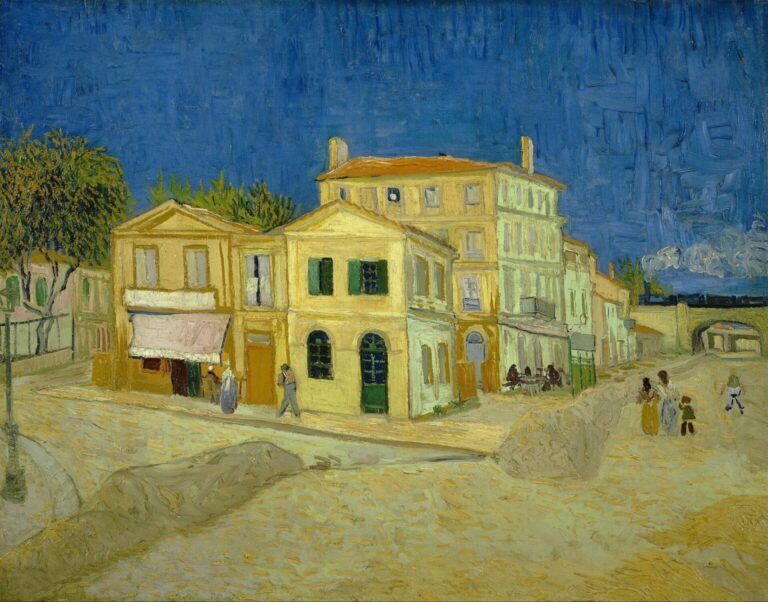
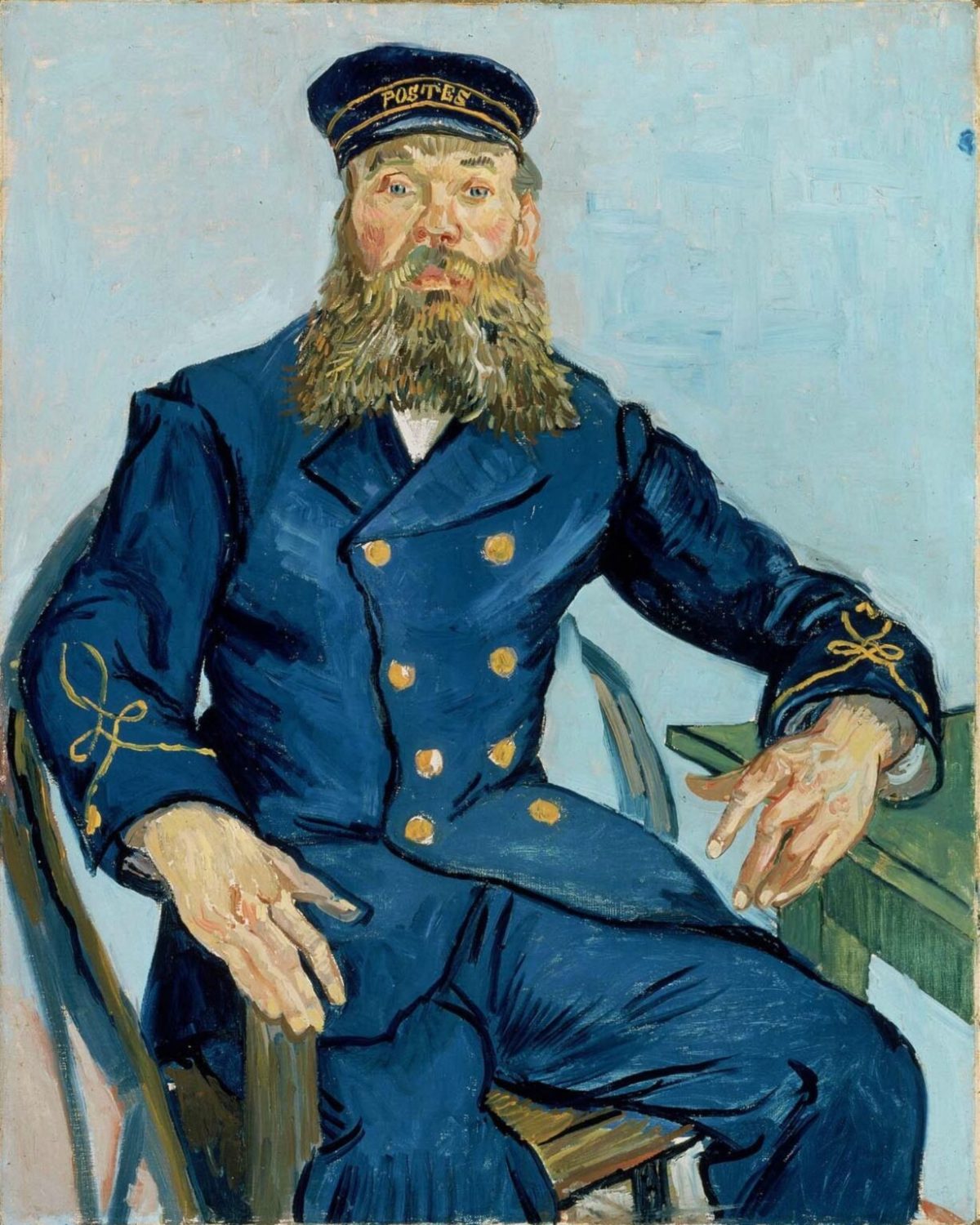
Joseph Roulin, who worked for the postal service at Arles railway station, was Van Gogh’s best friend in the south: a bearded, hard-drinking republican whom Vincent compared to Socrates. He posed several times in his blue uniform, and Vincent painted his wife Augustine, their sons Armand and Camille and the baby Marcelle, a whole family in portraits. After the ear crisis in December 1888, Roulin visited him in hospital, wrote to Theo and looked after the Yellow House. When Roulin was transferred to Marseille early in 1889, Vincent lost his anchor in Arles. See Postman Joseph Roulin.
Arles: soldiers, painters and a doctor
The Zouave second lieutenant Paul-Eugène Milliet took drawing lessons from Vincent and posed for him. The Belgian painter Eugène Boch became The Poet, painted against a starry blue background; his sister Anna Boch later bought The Red Vineyard. Paul Gauguin lived with him for nine weeks in the autumn of 1888, a friendship that ended in crisis; see Van Gogh and Gauguin. The young hospital doctor Félix Rey treated him after the ear incident and received a portrait in thanks. The family is said to have disliked it so much that it was used to patch a chicken coop; it is now in the Pushkin Museum in Moscow. In March 1889 Signac came to visit, and the two friends went to see Vincent’s shuttered house together.
Saint-Rémy and Auvers
At the asylum Van Gogh got on well with the chief attendant, Charles Trabuc, and painted him and his wife. In Auvers in 1890 he was under the eye of Dr Paul Gachet, a doctor with an interest in nervous illness and an amateur etcher, who had known Cézanne and Pissarro. Vincent thought the doctor seemed at least as troubled as he was himself, but liked him, painted him twice and made his only etching, Man with a Pipe, on Gachet’s press. See Portrait of Dr Gachet.
The friend who mattered most
Above all there was Theo: brother, banker, dealer and confidant, who received more than 650 letters. Friends from every period came together at the end. Bernard, Père Tanguy, Lucien Pissarro and Dr Gachet were among the mourners at the funeral in Auvers on 30 July 1890, where Bernard and others hung his paintings around the coffin.
Frequently asked questions
Who was Van Gogh’s best friend?
His brother Theo was his closest companion. Outside the family, the postman Joseph Roulin in Arles and the painter Émile Bernard were among his best friends.
Were Van Gogh and Toulouse-Lautrec friends?
Yes. They met at Cormon’s studio in Paris in 1886. Lautrec drew Van Gogh’s portrait in 1887 and defended his work in Brussels in 1890.
Who was Joseph Roulin?
A postal worker at Arles station who became Van Gogh’s close friend. Van Gogh painted him and all the members of his family.
Did Van Gogh have friends when he died?
Yes. Émile Bernard, Père Tanguy, Lucien Pissarro and Dr Gachet were among those at his funeral in Auvers-sur-Oise.
Sources: Van Gogh Letters – correspondents; Van Gogh Museum; Museum of Fine Arts Boston – Postman Joseph Roulin.