Home › Van Gogh Facts › Van Gogh’s Influence
His legacy
Van Gogh’s Influence on Modern Art
Within twenty years of his death, Van Gogh had become a model for a whole generation of young painters. His free colour, visible brushwork and belief that painting should express feeling helped launch Fauvism and Expressionism, and his influence runs through twentieth-century art.
Colour that expresses feeling
Before Van Gogh, most painters used colour to describe what they saw. Van Gogh used it to express what he felt. He wrote about painting a friend’s head against the richest blue he could make, to suggest the infinite, and about trying to show the terrible passions of humanity with red and green in The Night Café. His thick, directional brushstrokes made the act of painting visible. These ideas, more than any one picture, were what younger artists took from him.
The Fauves
The turning point in France was a retrospective of Van Gogh’s work at the Bernheim-Jeune gallery in Paris in 1901. Maurice de Vlaminck later said that on that day he loved Van Gogh more than his own father. At the Salon d’Automne of 1905, Vlaminck, Henri Matisse and André Derain showed pictures in such violent, unnatural colours that a critic called them fauves, wild beasts. Their pure reds, greens and blues, laid on straight from the tube, owe a direct debt to Van Gogh’s paintings of Arles.
The German Expressionists
Van Gogh’s influence was even stronger in Germany, where dealers such as Paul Cassirer showed and sold his work from the early 1900s. In 1905 a Van Gogh exhibition at the Galerie Arnold in Dresden made a deep impression on the young artists who had just founded Die Brücke (The Bridge), Ernst Ludwig Kirchner, Erich Heckel and Karl Schmidt-Rottluff. Their harsh colours, jagged strokes and emotional landscapes are unthinkable without him. In Munich, Wassily Kandinsky and Franz Marc of Der Blaue Reiter admired his spiritual use of colour. The Sonderbund exhibition in Cologne in 1912 presented him as the father of modern art.
Later artists
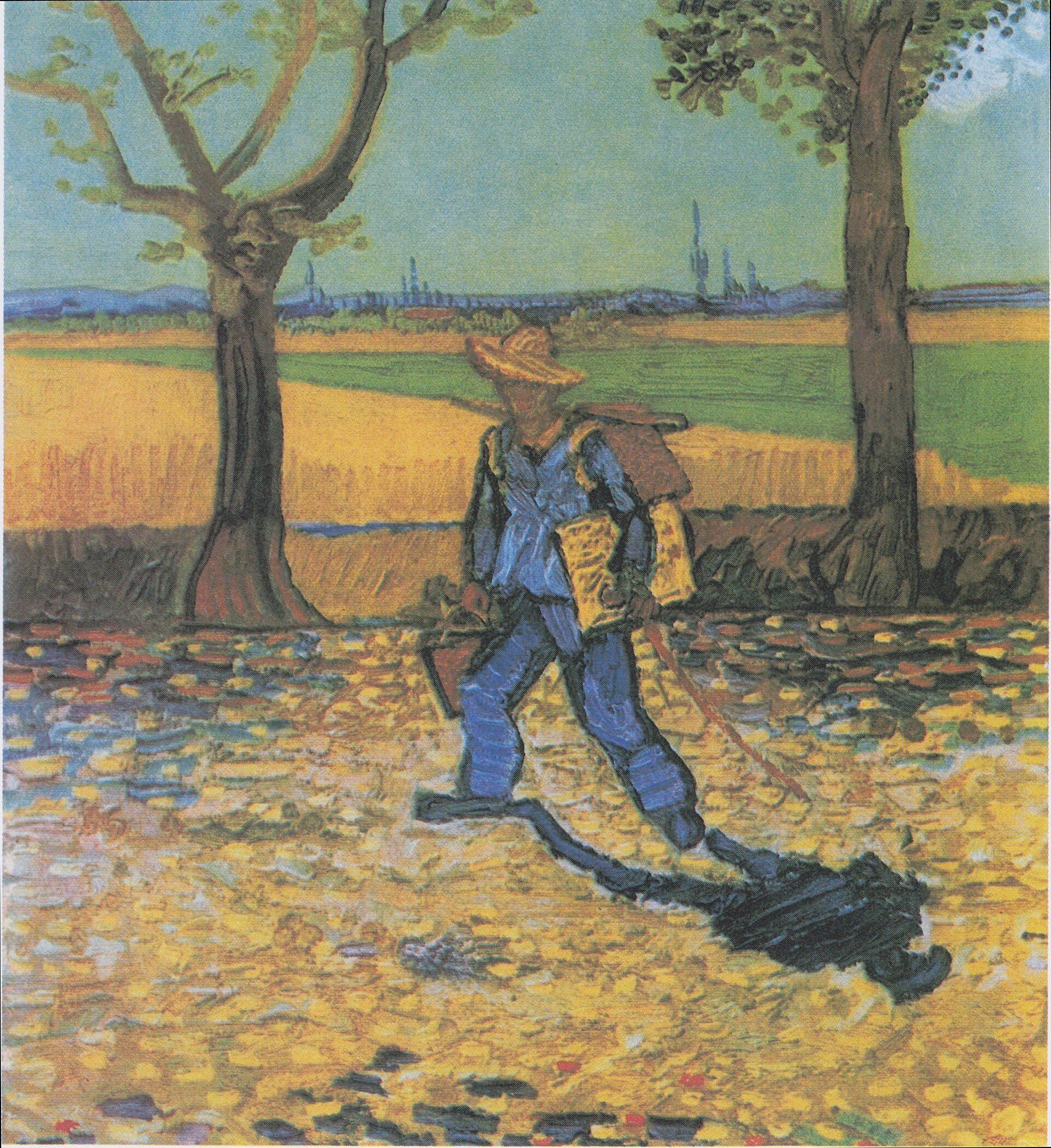
- Francis Bacon painted a series of Studies for a Portrait of Van Gogh in 1956–57, based on The Painter on His Way to Work, a self-portrait destroyed in Germany in 1945.
- The Abstract Expressionists in New York admired the physical energy of his brushwork.
- David Hockney has often spoken of his love of Van Gogh, and the 2019 exhibition Hockney–Van Gogh: The Joy of Nature in Amsterdam showed the two side by side.
- Film and popular culture, from Kurosawa’s Dreams to the painted animation Loving Vincent (2017), keep returning to his images.
Why it still matters
Van Gogh showed that a painting could be a direct record of an artist’s inner life, and that colour and brushwork could carry meaning on their own. That idea runs through much of modern art. To see how his own fame grew alongside his influence, read how Van Gogh became famous, and for his own methods see Van Gogh’s technique.
Frequently asked questions
Which art movements did Van Gogh influence?
Above all Fauvism in France and Expressionism in Germany, and later many abstract and figurative painters of the twentieth century.
Is Van Gogh an Impressionist?
No. He learned from the Impressionists in Paris but is usually classed as a Post-Impressionist, with Cézanne, Gauguin and Seurat.
Which artists were influenced by Van Gogh?
Matisse, Derain, Vlaminck, Kirchner, Heckel, Schmidt-Rottluff, Kandinsky, Franz Marc, Francis Bacon and David Hockney, among many others.
Sources: Van Gogh Museum; vangoghletters.org; exhibition histories (Bernheim-Jeune 1901, Galerie Arnold 1905, Sonderbund 1912).