Home › Van Gogh Facts › Van Gogh vs Monet
Van Gogh’s Art
Van Gogh vs Monet: How the Two Painters Compare
Claude Monet and Vincent van Gogh are the two most popular painters of the late nineteenth century, and they are often confused. Both painted fields, flowers and water in bright colour. But they worked in very different ways, and for different reasons. Here is how they compare, and the surprising link between them: Vincent’s brother Theo.
At a glance
| Claude Monet | Vincent van Gogh | |
|---|---|---|
| Lived | 1840–1926, France | 1853–1890, Netherlands, Belgium, England, France |
| Movement | Impressionism (founder) | Post-Impressionism |
| Career | About 65 years | About 10 years |
| Paintings | More than 2,000 | About 860 |
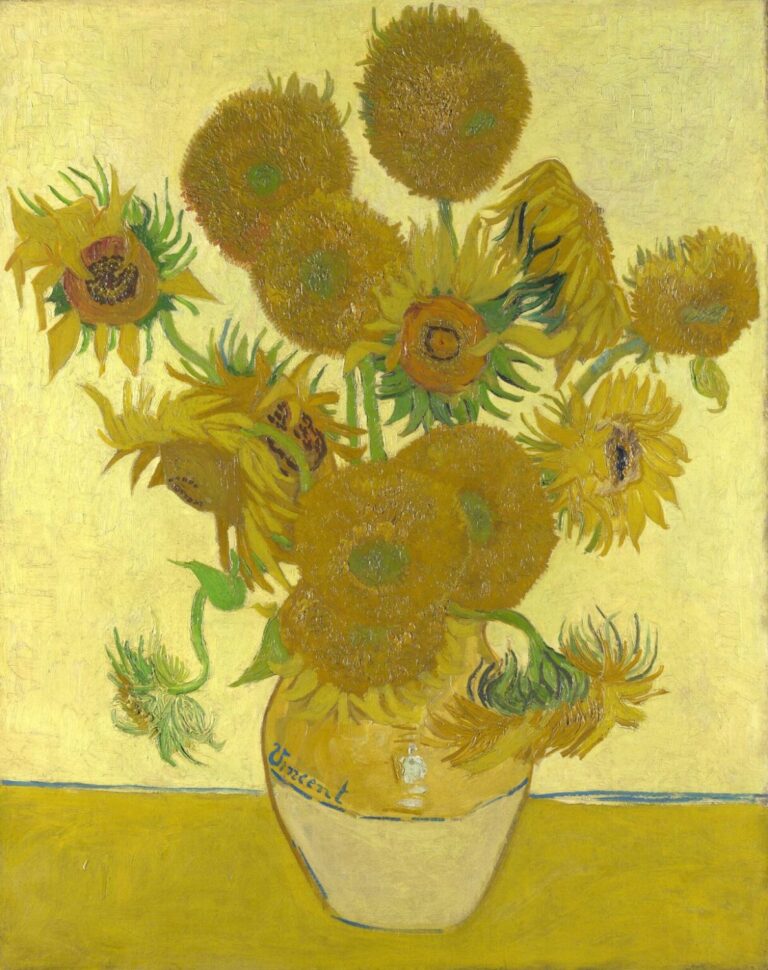
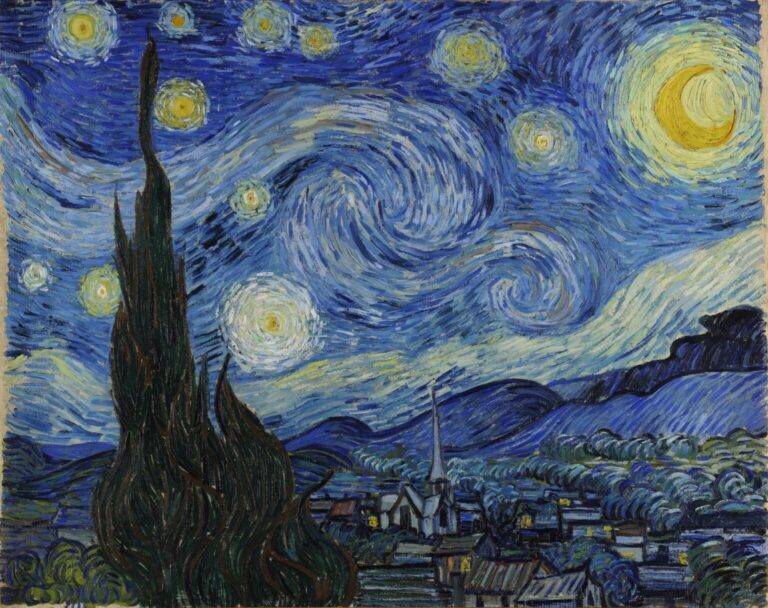
| Famous works | Impression, Sunrise; Haystacks; Water Lilies | The Starry Night; Sunflowers; The Bedroom |
| Success in life | Rich and famous by the 1890s | Sold almost nothing |
| Auction record | $110.7 million (Meules, 2019) | $190.4 million (Blossoming Chestnut Trees, 2026) |
Light versus feeling
Monet wanted to record exactly what the eye sees at a given moment: the colour of light on a haystack at sunset, the mist on the Thames, the reflections on his lily pond. He painted the same subject many times in series to catch changes in weather and time of day, using small, soft, broken touches of colour that dissolve outlines.
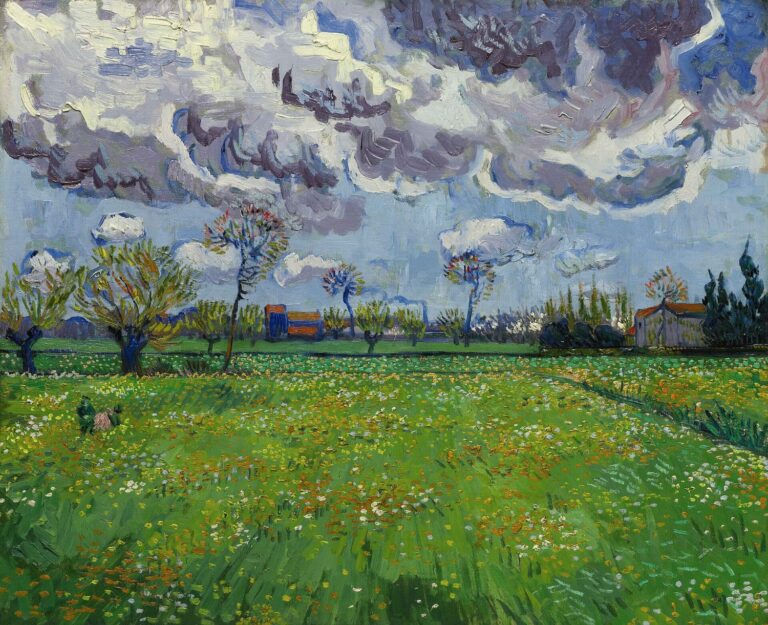
Van Gogh started from Impressionism but went the other way. He wanted colour and brushwork to carry emotion. He outlined shapes boldly, used colour “arbitrarily” when it served the feeling, and laid on thick, directional strokes that give his pictures their energy. Where a Monet seems to shimmer, a Van Gogh seems to move. See Van Gogh’s technique.
What Van Gogh learned from Monet
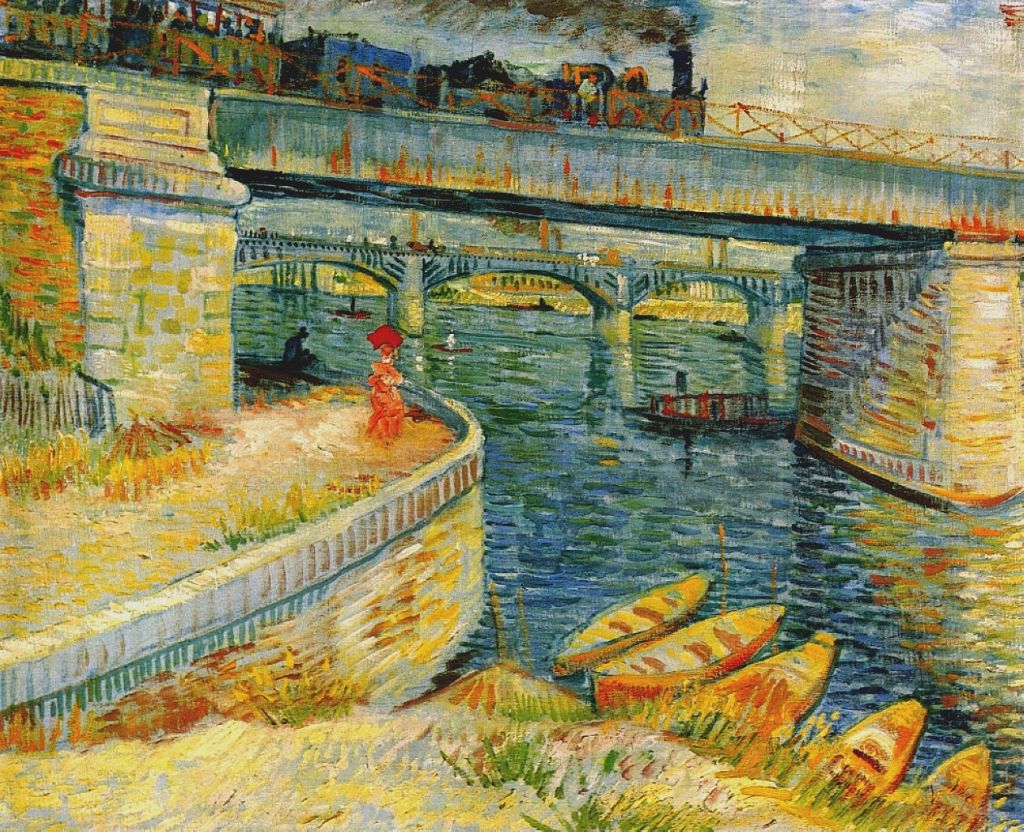
Van Gogh first saw Impressionist paintings when he arrived in Paris in 1886, and he singled out a landscape by Monet among the pictures he most admired. Through 1887 he lightened his palette, painted the Seine at Asnières in short, broken strokes (above) and experimented with the dots of the Neo-Impressionists. By the time he moved to Arles in 1888 he had absorbed Impressionist colour and moved beyond it. Gauguin told him he had seen a fine Monet of sunflowers in a Japanese vase, but liked Vincent’s better.
Did Van Gogh and Monet meet?
There is no record that they ever met. But they were closely connected through Theo van Gogh, who ran the modern art branch of the dealers Boussod, Valadon & Cie in Paris. Theo made his first purchase from Monet in April 1887, bought more canvases from him at Giverny, and in 1888 and 1889 organised exhibitions of his work, including Monet’s first solo show in London. The money Theo earned selling Monets helped pay Vincent’s allowance.
What they had in common
Both loved Japanese prints: Monet collected more than two hundred and hung them throughout his house at Giverny. Both painted outdoors, both painted wheatfields, poppies, rivers and flowers, and both changed how later artists used colour. And both are now among the most visited painters in the world’s museums.
Where to see them side by side
Several museums hang both painters close together: the Musée d’Orsay in Paris, the Metropolitan Museum and MoMA in New York, the Art Institute of Chicago and the National Gallery in London. Use our museum map to plan a visit.
Frequently asked questions
What is the difference between Van Gogh and Monet?
Monet was an Impressionist who recorded fleeting effects of light with soft, broken colour. Van Gogh was a Post-Impressionist who used thick, directional strokes, outlines and bold colour to express emotion.
Did Van Gogh and Monet know each other?
There is no evidence they met, but Theo van Gogh was Monet’s dealer in Paris in 1887–90.
Is Van Gogh an Impressionist like Monet?
No. Van Gogh learned from Impressionism in Paris but is classed as a Post-Impressionist.
Who is more expensive, Van Gogh or Monet?
Van Gogh. His auction record is $190.4 million (2026); Monet’s is $110.7 million (2019).
Sources: The Art Newspaper – Theo van Gogh and Monet’s first London exhibition (2026); Van Gogh Museum – Theo van Gogh and Impressionism; Van Gogh Letters – letter 721.