Home › Paintings › Prints and reproductions
Buying guide
Buying Van Gogh Prints and Reproductions: A Practical Guide
A good Van Gogh print can be a beautiful thing; a bad one is oversaturated, wrongly cropped and printed on paper that fades in a year. Here is how to choose, where the museums sell their own reproductions, and how to print a masterpiece yourself for free.
Start free: download the paintings
Van Gogh died in 1890, so his paintings are in the public domain, and several museums let you download high-resolution photographs of the works they own:
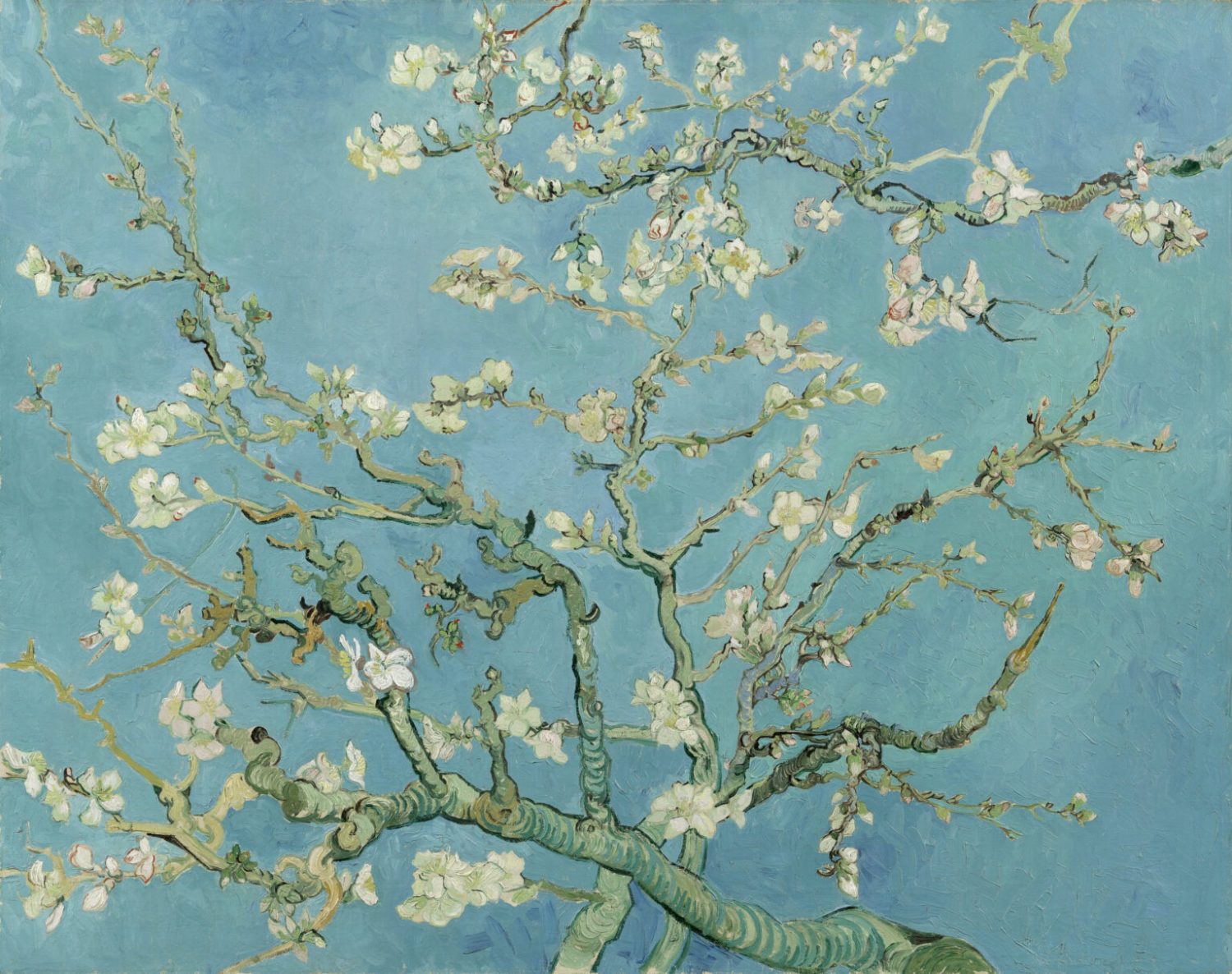
- Van Gogh Museum, Amsterdam: images from its online collection can be downloaded free for non-commercial use, including personal prints. This covers Almond Blossom, the Bedroom, the Amsterdam Sunflowers and hundreds more.
- Getty Museum, Los Angeles: its Open Content programme offers free high-resolution downloads, including Irises.
- National Gallery of Art, Washington, the Metropolitan Museum, the Art Institute of Chicago and the Rijksmuseum also publish open-access images of their Van Goghs.
A file of 4,000 pixels or more on the long side is enough for a sharp A3 or 50 cm print at a local photo or fine-art printer. For screens, see our free Van Gogh wallpapers.
Types of print, explained
- Poster: printed by offset or cheap inkjet on thin coated paper. Fine for a dorm or a child’s room; colours often drift and fade in sunlight.
- Art print or giclée: a high-end inkjet print with pigment inks (often 8 to 12 colours) on heavy cotton or watercolour paper. Colour is far more accurate and, behind glass and out of direct sun, lasts for decades.
- Canvas giclée: the same process on canvas, stretched on a frame and usually varnished. It looks closest to a painting from across a room, though the brushstrokes are flat.
- Hand-painted copy: an oil painting made by a copyist. Quality ranges from excellent to crude; it is legal as long as it is sold as a copy, never as an original.
Where the museums sell their own
The best-quality reproductions usually come from the museums themselves, because they print from their own colour-checked master files:
- Van Gogh Museum shop: print on demand from more than 600 works in the museum’s collection, as giclées on fine-art watercolour paper, on canvas or mounted on Dibond, optionally framed, with a certificate of authenticity. Prices start at around €40 for small paper prints. The museum also makes limited-edition replicas of drawings and sketchbooks.
- Rijksmuseum shop: giclées of its own Van Gogh self-portrait.
- Maison de Van Gogh (Auberge Ravoux), Auvers-sur-Oise: varnished canvas giclées of the Auvers paintings, made with the same printer the Van Gogh Museum works with.
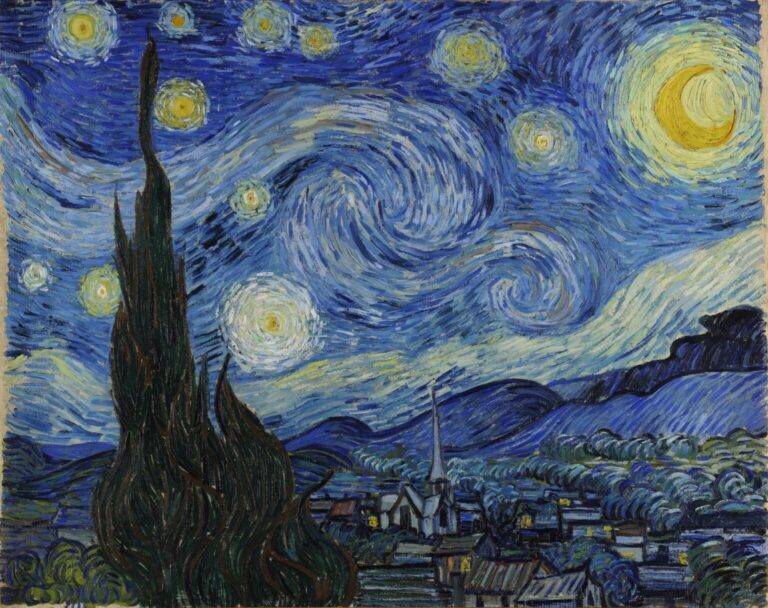
Other museums that own famous Van Goghs, such as MoMA (The Starry Night) and the National Gallery in London, sell posters and prints of them in their shops; see our museum map for who owns what.
How to choose a good print
- Check the proportions. A good print keeps the painting’s shape. The Starry Night is 73.7 × 92.1 cm, roughly 4:5; many cheap prints crop or stretch it to fit standard frames.
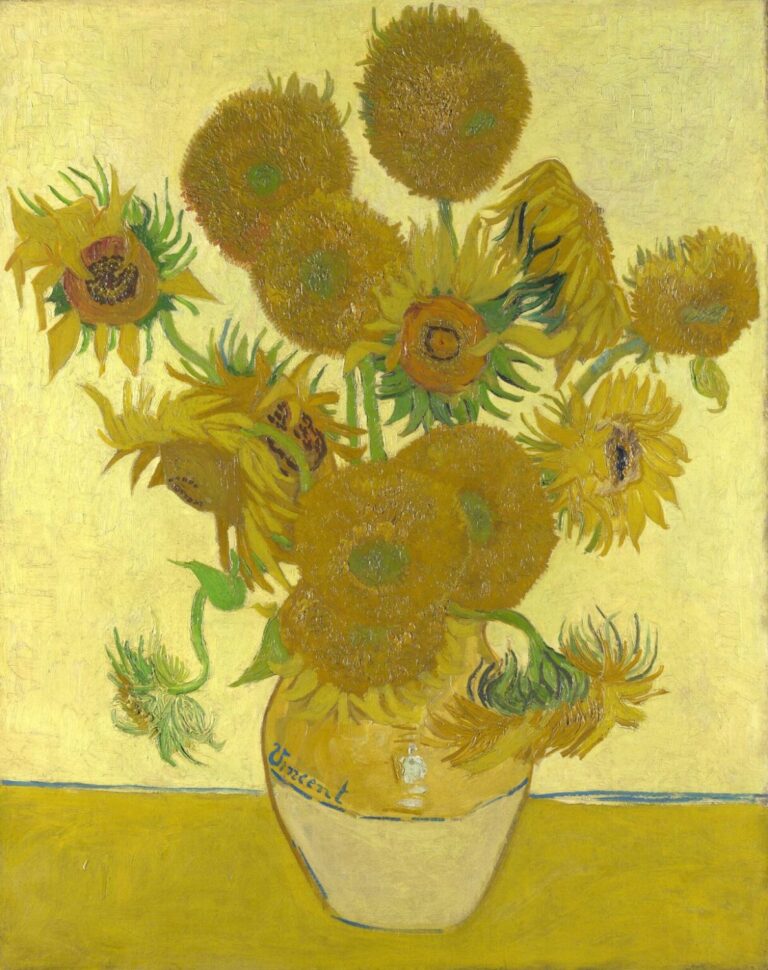
- Look at the colour. Online sellers often boost saturation. Compare with the museum’s own image: the Sunflowers are ochre and chrome yellow, not neon.
- Ask about inks and paper. Pigment inks on acid-free cotton paper (around 285–310 gsm) are archival; dye inks on thin paper are not.
- Think about scale. Most originals are modest: the London Sunflowers are 92.1 × 73 cm, the Almond Blossom 73.3 × 92.4 cm. Printing near actual size gives the most natural effect.
- Avoid “signed” or “limited edition” Van Goghs. A reproduction can be a limited edition of the printer’s run, but nothing can be signed by Van Gogh. Original Van Goghs sell for millions; see how much a Van Gogh is worth and our guide to fakes and forgeries.
Which paintings make the best prints
Horizontal landscapes and strong, simple compositions reproduce best. The most popular choices are Almond Blossom (calm, works in bedrooms and nurseries), The Starry Night, the Café Terrace at Night, the Sunflowers and Irises. For something less familiar, browse the orchards in blossom, the flower paintings or the 886 works in our painting explorer, and use our colour palettes to match a print to a room.
Frequently asked questions
Are Van Gogh paintings copyright free?
Yes. Van Gogh died in 1890, so his paintings are in the public domain everywhere. Museums may set their own terms for the photographs they take, but most major museums now allow free downloads, at least for non-commercial use.
What is a giclée print?
A high-quality inkjet print made with archival pigment inks on fine-art paper or canvas. It reproduces colour more accurately and lasts much longer than an ordinary poster.
Where can I buy an official Van Gogh print?
From the shops of the museums that own the paintings, above all the Van Gogh Museum, which prints more than 600 works on demand as giclées with a certificate of authenticity.
Can I print a Van Gogh painting myself?
Yes. Download a high-resolution image from a museum that allows it, such as the Van Gogh Museum (for non-commercial use) or the Getty, and take it to a photo or fine-art printer. Aim for at least 4,000 pixels on the long side for a large print.
Is a “signed” Van Gogh print real?
No. Van Gogh never made signed print editions of his paintings, and any reproduction claiming his signature is misleading. He signed only about one painting in seven.
Sources: Van Gogh Museum shop – custom reproductions; Van Gogh Museum – use and permissions of collection images; Van Gogh Museum – high-end reproductions; Getty – how to download art for free; Maison de Van Gogh shop.