Vincent van Gogh – Gauguin’s Armchair 1888
An elegant armchair at night, with a lit candle and two novels on its seat: Van Gogh painted Paul Gauguin’s chair in November 1888 as a portrait of his friend – and a pair to his own humble chair.
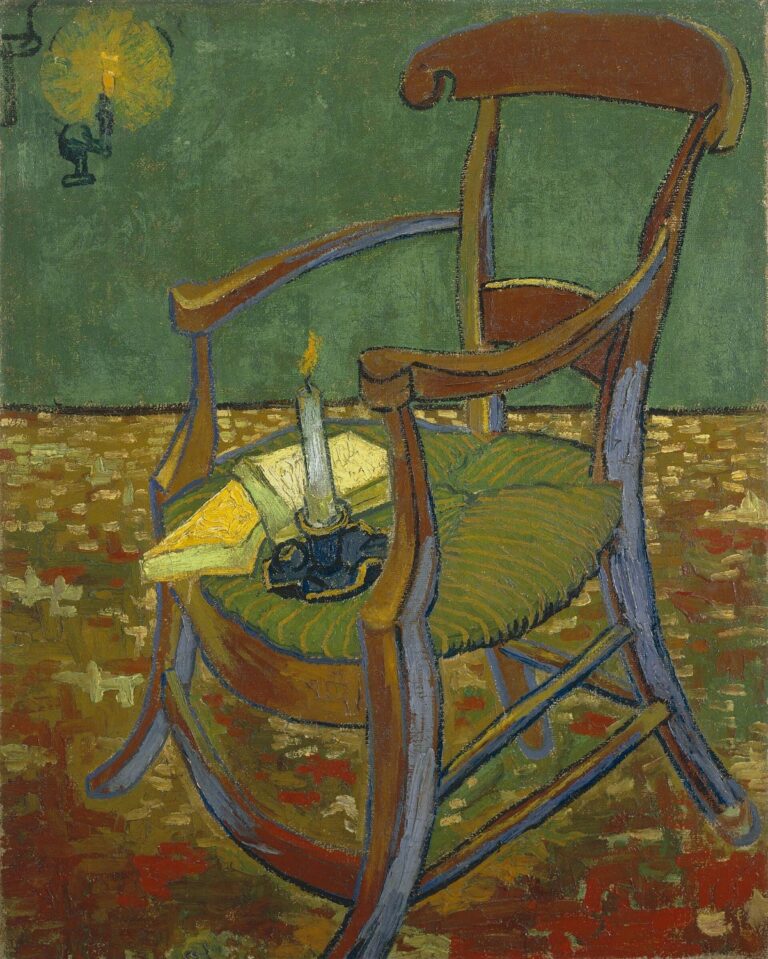
An elegant armchair at night, with a lit candle and two novels on its seat: Van Gogh painted Paul Gauguin’s chair in November 1888 as a portrait of his friend – and a pair to his own humble chair.

A plain wooden chair with a rush seat, a pipe and a pouch of tobacco: Van Gogh’s Chair is a self-portrait without a face, painted as a pair with Gauguin’s armchair in November 1888.

A gnarled plum tree in white blossom fills the foreground while visitors stroll beyond: Van Gogh copied Hiroshige’s famous print in oil paint in 1887 to learn the secrets of Japanese art.
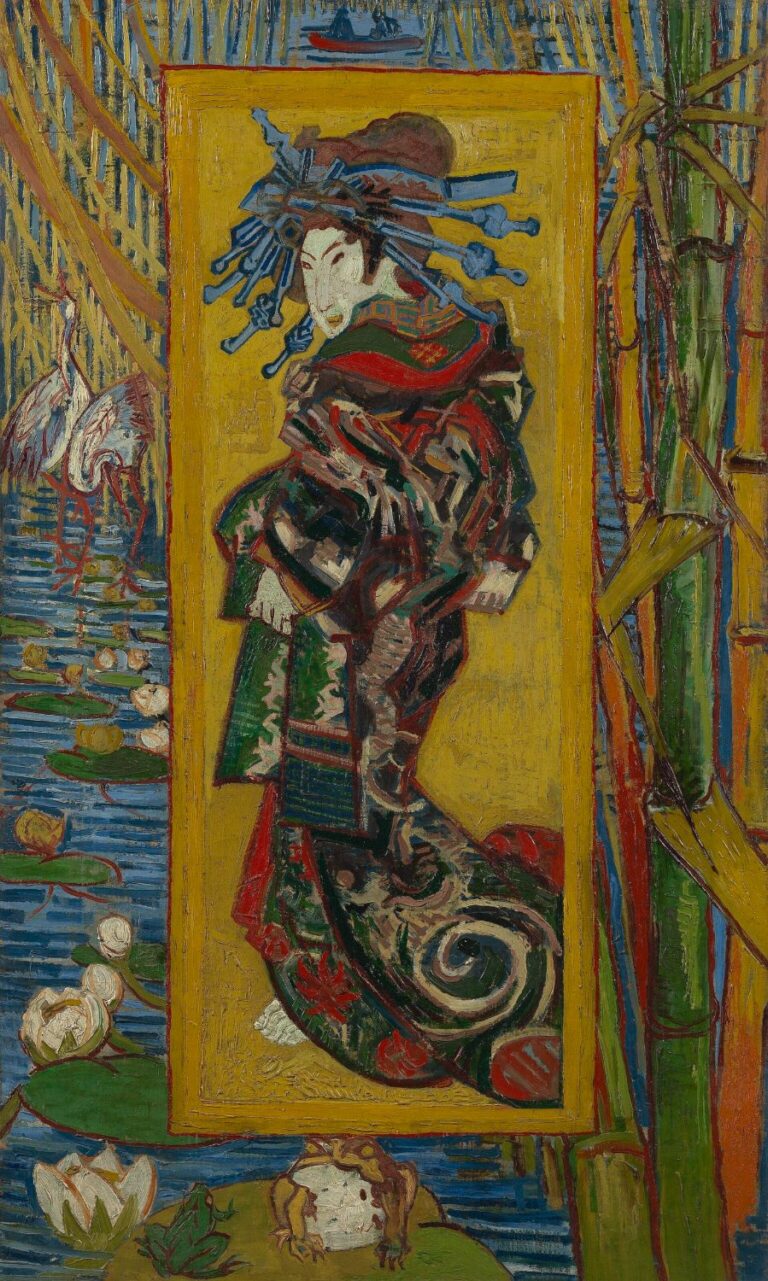
A Japanese courtesan in a magnificent robe, surrounded by frogs, cranes and bamboo: Van Gogh copied the figure from a magazine cover and turned it into one of the boldest images of his Paris years.
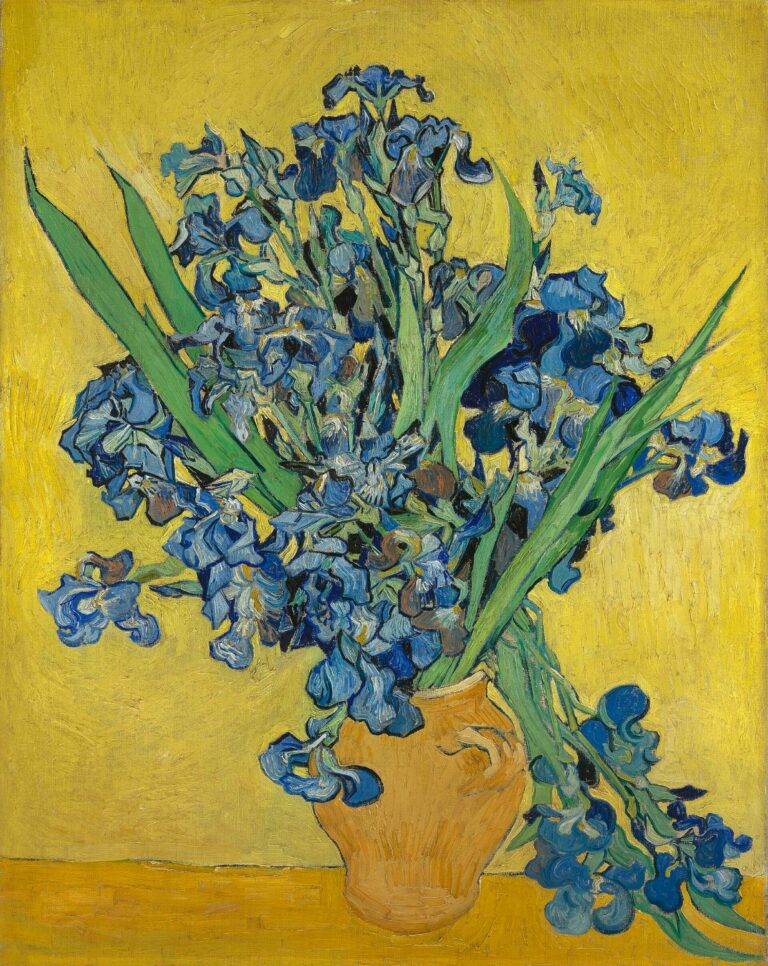
A great bouquet of violet-blue irises bursts from a vase against a bright yellow background: Van Gogh painted it in his last days at the Saint-Rémy asylum, as he prepared to leave Provence.
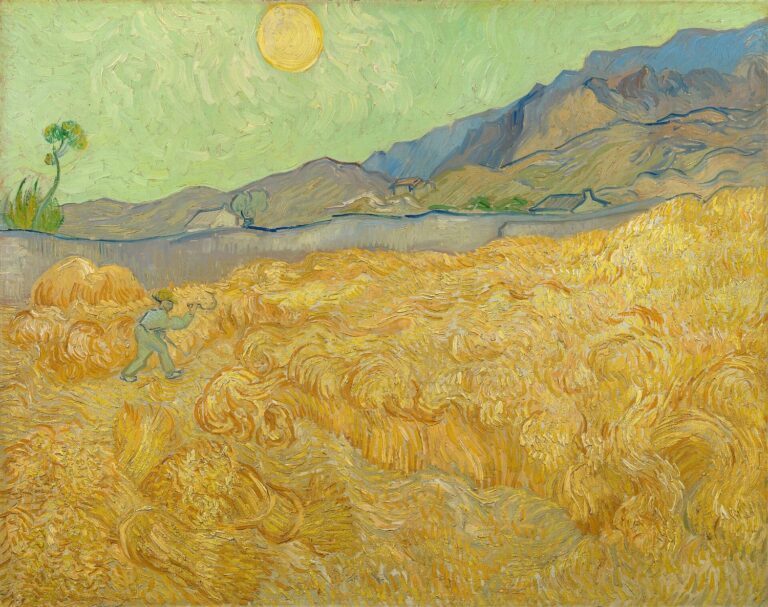
A lone reaper cuts through a sea of yellow wheat under a blazing yellow-green sky: Van Gogh saw the figure as an image of death – but, he said, a death with nothing sad about it.

Van Gogh portrayed himself with a shaved head and slanting eyes against a pale green background, as a Japanese monk: he painted this self-portrait in Arles in 1888 as a gift for Paul Gauguin.
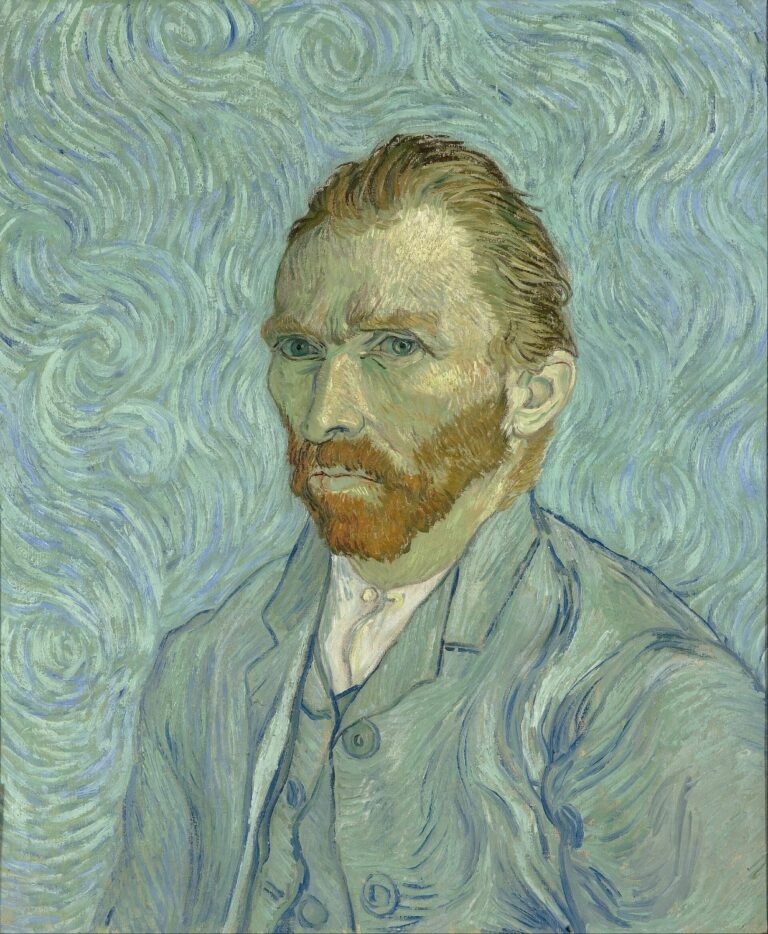
Van Gogh stares out from a background of swirling blue: this self-portrait, painted at the Saint-Rémy asylum in September 1889, is one of the last he made and one of the most famous.
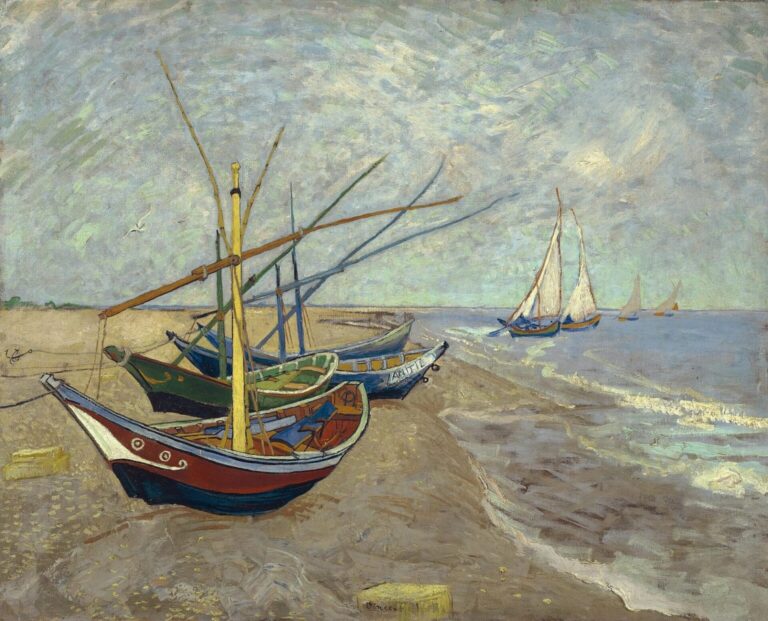
Four brightly painted fishing boats lie on the sand while others sail out to sea: Van Gogh painted this picture after a short trip to the Mediterranean village of Saintes-Maries-de-la-Mer in June 1888.
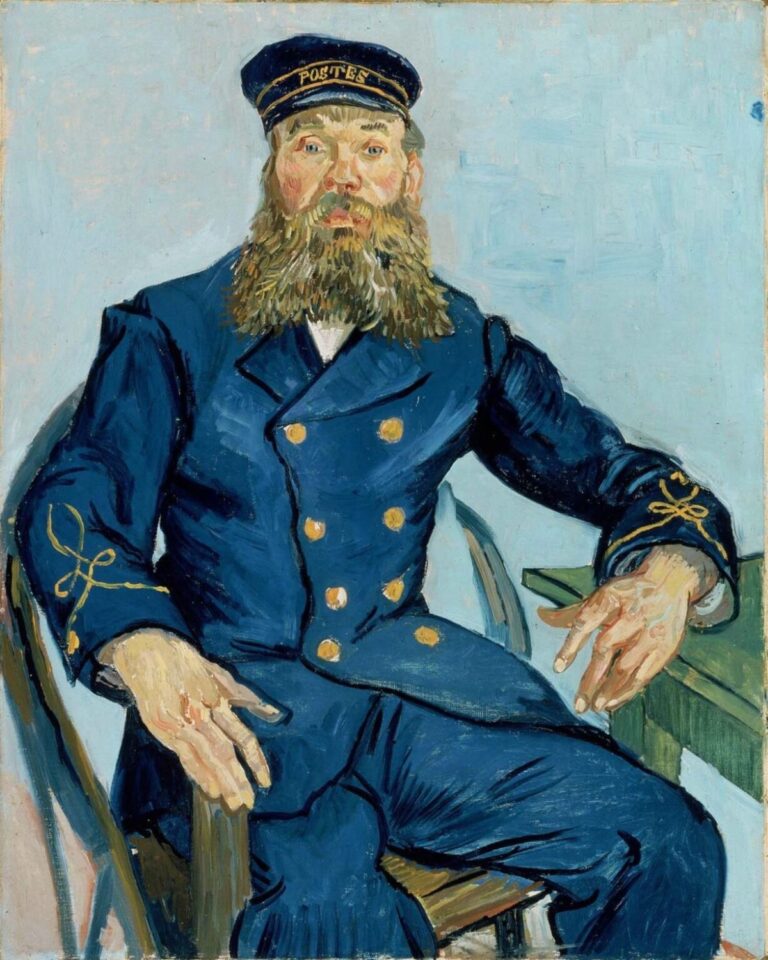
A bearded postman in a blue uniform and cap, sitting square to the viewer: Joseph Roulin became Van Gogh’s closest friend in Arles, and this is the first of the many portraits he made of him and his family.